Boston's Park System Stands Apart in a World of Concrete Cities
From the Emerald Necklace to the Boston Common, this city's commitment to green space rivals — and in some ways surpasses — what London, New York, and Paris have managed to preserve.
From the Emerald Necklace to the Boston Common, this city's commitment to green space rivals — and in some ways surpasses — what London, New York, and Paris have managed to preserve.
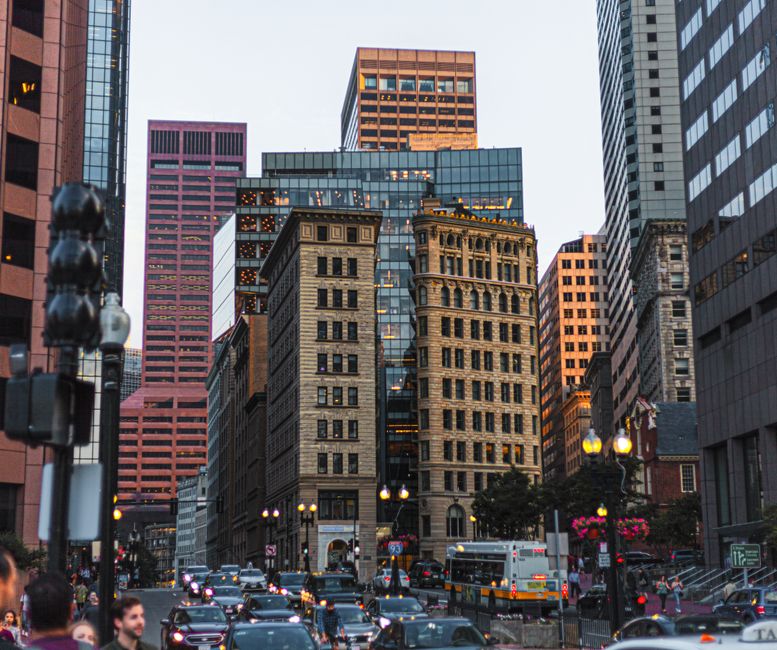
Boston's parks are its secret competitive advantage. While global cities from London to Mexico City wrestle with sprawl, pollution, and a shrinking commons, this city has doubled down on an 150-year-old vision of interconnected green space that still shapes how residents live, work, and move around their neighbourhoods.
That matters now because the summer cancellation of Fourth of July celebrations across the East Coast — from Washington DC to Philadelphia — underscores how brutal heat and climate volatility are remaking outdoor life in American cities. Boston has largely avoided the same blanket cancellations, partly because its park system offers flexible, shaded alternatives to traditional open-air gatherings. The Boston Common alone can absorb crowds into its tree cover when the sun becomes unforgiving. On July 3rd, despite temperatures reaching 94 degrees, the Esplanade drew thousands to its established shade patterns and water features.
The real distinction lies in the Emerald Necklace itself. Frederick Law Olmsted's 1878 masterwork — a 1.1-mile chain of parks running from the Boston Common through the Back Bay Fens, Jamaica Park, the Arnold Arboretum, and beyond — remains one of the few completely realised urban park systems in North America. Paris has its scattered gardens. London has Hyde Park and Regent's Park. New York has Central Park. Boston has something few cities manage: a coherent ecosystem of green space that actually connects neighbourhoods rather than isolating them.
That connectivity changes behaviour. Someone living in Roxbury can walk 45 minutes through Jamaica Plain without leaving the park system. The Arnold Arboretum, part of that Necklace, spans 281 acres with 15,000 specimens. Most city dwellers never step foot in their urban botanical gardens. Bostonians use theirs as a de facto commute route and weekend refuge.
The Massachusetts Horticultural Society, based on Elm Street in Back Bay, has operated since 1829 — predating the Emerald Necklace itself. Its recent expansion of public programming in partnership with neighbourhood centres means gardening workshops and plant identification classes now reach East Boston and Dorchester residents who historically had less access to green space education.
Hard numbers tell the story. Boston Parks and Recreation manages 2,338 acres of parkland across the city, with an additional 1,400 acres in partnership with state agencies. That's roughly 340 acres per 100,000 residents — higher than Philadelphia's ratio and comparable to Toronto's, though London's fragmented system covers less contiguous ground.
Property values near the parks reflect this. A townhouse overlooking the Charles River Esplanade commands a premium 18 to 22 percent above comparable units two blocks inland, according to recent sales data from the Boston Real Estate Board. The Fens neighbourhood, once industrial marshland that Olmsted transformed, has seen consistent regeneration investments totalling $45 million since 2015 alone.
The city maintains an edge partly through institutional permanence. The Emerald Necklace Conservancy, founded in 2012, operates as a dedicated steward separate from city politics. Its annual budget of $2.1 million specifically targets restoration and programming. Most cities lack that buffer.
For visitors arriving this summer, the practicality is straightforward: start at Boston Common, follow the green line painted on sidewalks toward Public Garden, then continue through Back Bay Fens toward Jamaica Plain. The entire route takes six hours at a leisurely pace and costs nothing. Bring water. Most entrances have fountain access. Early mornings are cooler, and the parks stay open until dusk.
The real test comes next. As climate patterns intensify, cities abandoning outdoor culture will retreat indoors. Boston's park system, because it's been intentionally connected for 150 years, offers something most competitors are still trying to build: genuine flexibility. When one plaza gets too hot, residents have shade three blocks away. That's not nostalgia. That's infrastructure for a hotter world.
How does this story make you feel?
Spread the word
About this article
Published by The Daily Boston
Daily brief
Free, in your inbox before 7am. Weekdays.
More in lifestyle


