'My Family's History Just Vanished': Boston Residents Speak Out on Duplicate Image Replacement
When digital archives swap or overwrite photographs without warning, the people who lose the most are often those who could least afford the loss.
When digital archives swap or overwrite photographs without warning, the people who lose the most are often those who could least afford the loss.

Roxbury resident Darlene Ferreira had stored three decades of family photographs in a community archive hosted by a local nonprofit. Last spring, she logged in to find that dozens of her images had been replaced by duplicate placeholders — grey squares, stock thumbnails, and in several cases, someone else's photographs entirely. Her originals were gone. "It felt like a fire," she told a neighbor who later relayed the exchange to a Daily Boston reporter. "Except nobody called 911."
The issue of duplicate image replacement — where digital systems, during database migrations or storage optimizations, overwrite unique files with generic or repeated images — has been surfacing with increasing urgency across Boston's community organizations in 2026. It is not a new technical problem, but the scale of its impact on working-class and immigrant communities has grown sharply as more local groups digitized physical records during the post-pandemic push toward cloud storage between 2021 and 2024.
The urgency stems partly from timing. Many Boston nonprofits received one-time digitization grants under the Massachusetts Cultural Facilities Fund, which in fiscal year 2023 distributed roughly $8.4 million statewide to help organizations move physical archives online. The compressed timelines those grants encouraged meant that metadata tagging — the technical step that prevents duplicate-detection algorithms from collapsing distinct images into a single stored file — was often skipped or done incompletely. When platforms later ran deduplication sweeps to cut storage costs, irreplaceable images disappeared.
The Dudley Street Neighborhood Initiative in Roxbury, which maintains a visual archive of the neighborhood's organizing history going back to the 1980s land trust movement, confirmed to The Daily Boston that it had experienced unexplained image losses during a server migration in late 2024. The organization declined to specify how many files were affected while it continues to audit the damage. Meanwhile, the Jamaica Plain Historical Society, located near the Loring-Greenough House on South Street, said it has been manually reviewing approximately 4,000 digitized photographs since January to identify any that were incorrectly flagged as duplicates during a 2023 cloud transfer.
For many community members, the losses are not merely sentimental. Immigrant families in East Boston and Dorchester have relied on digitized identity photographs and records to support immigration proceedings, housing applications, and family reunification cases. Legal aid organizations operating in those neighborhoods say the destruction of visual documentation, even when not caused by malicious actors, can create real procedural complications for clients navigating federal and state bureaucracies.
Community members who spoke to The Daily Boston — through a listening session organized by the Mattapan-based nonprofit Transformative Culture Project in June 2026 — described a consistent set of frustrations. They said they received no advance warning before migrations took place, no post-migration audit reports, and no clear process for filing a complaint or requesting restoration of lost files. Several said they only discovered losses months later, when searching for a specific image.
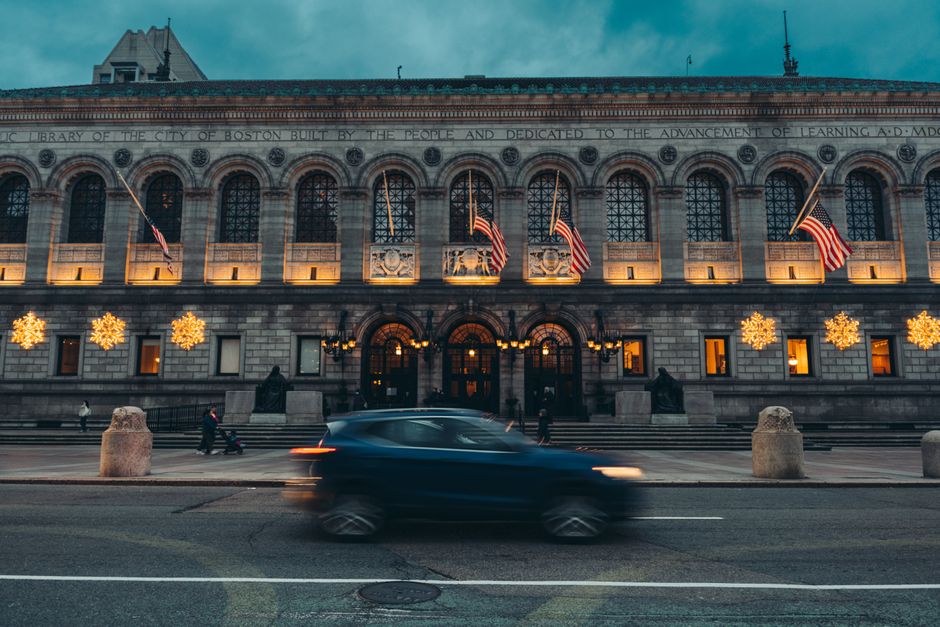
Technical advocates say the fix is not complicated but does require deliberate policy. Archivists recommend that any deduplication process be run against a hash-verified backup, not the primary archive, and that community organizations retain at minimum a 90-day recovery window after any migration. The Boston Public Library's Digital Repository Service, headquartered at the Central Library on Boylston Street in Copley Square, offers free consultation to qualifying nonprofits on exactly these protocols — a resource that several affected groups said they were unaware existed.
City Hall has not publicly addressed the issue. Mayor Michelle Wu's office did not respond to a request for comment by deadline. The Mayor's Office of New Urban Mechanics, which has previously partnered with community groups on digital equity initiatives, is a logical venue for a city-level response, advocates say, though no formal proposal has been tabled as of July 4.
For residents like Ferreira, policy timelines feel abstract. Her advice to neighbors is blunt: download your own copies, store them on a physical hard drive, and never assume the cloud is permanent. It is the kind of lesson that costs nothing to learn in advance, and everything to learn after the fact.
How does this story make you feel?
Spread the word
About this article
Published by The Daily Boston
Daily brief
Free, in your inbox before 7am. Weekdays.
More in News