news
'My grandmother's face is just gone': Boston residents push back on AI-altered family photos
Across Roxbury, Jamaica Plain, and East Boston, community members are raising alarms about image-replacement software that is quietly overwriting irreplaceable personal and cultural records.
How we reported this
The photo had survived a house fire, two moves across the Atlantic, and forty years in a shoebox in Roxbury. Then a well-meaning relative ran it through an AI photo-restoration app, and the face of an 80-year-old woman from County Clare was replaced with a smooth, unrecognizable composite. The original scan is gone. The altered version is what the family has now.
Stories like that one are becoming common enough that community organizations across Boston are beginning to treat duplicate-image replacement, the practice by which AI tools automatically substitute degraded, blurry, or low-resolution images with algorithmically generated stand-ins, as a genuine cultural-preservation emergency. The issue has landed with particular force in immigrant communities and historically underrepresented neighborhoods, where physical photographs often represent the only surviving visual record of entire family lines.
A problem surfacing in specific places
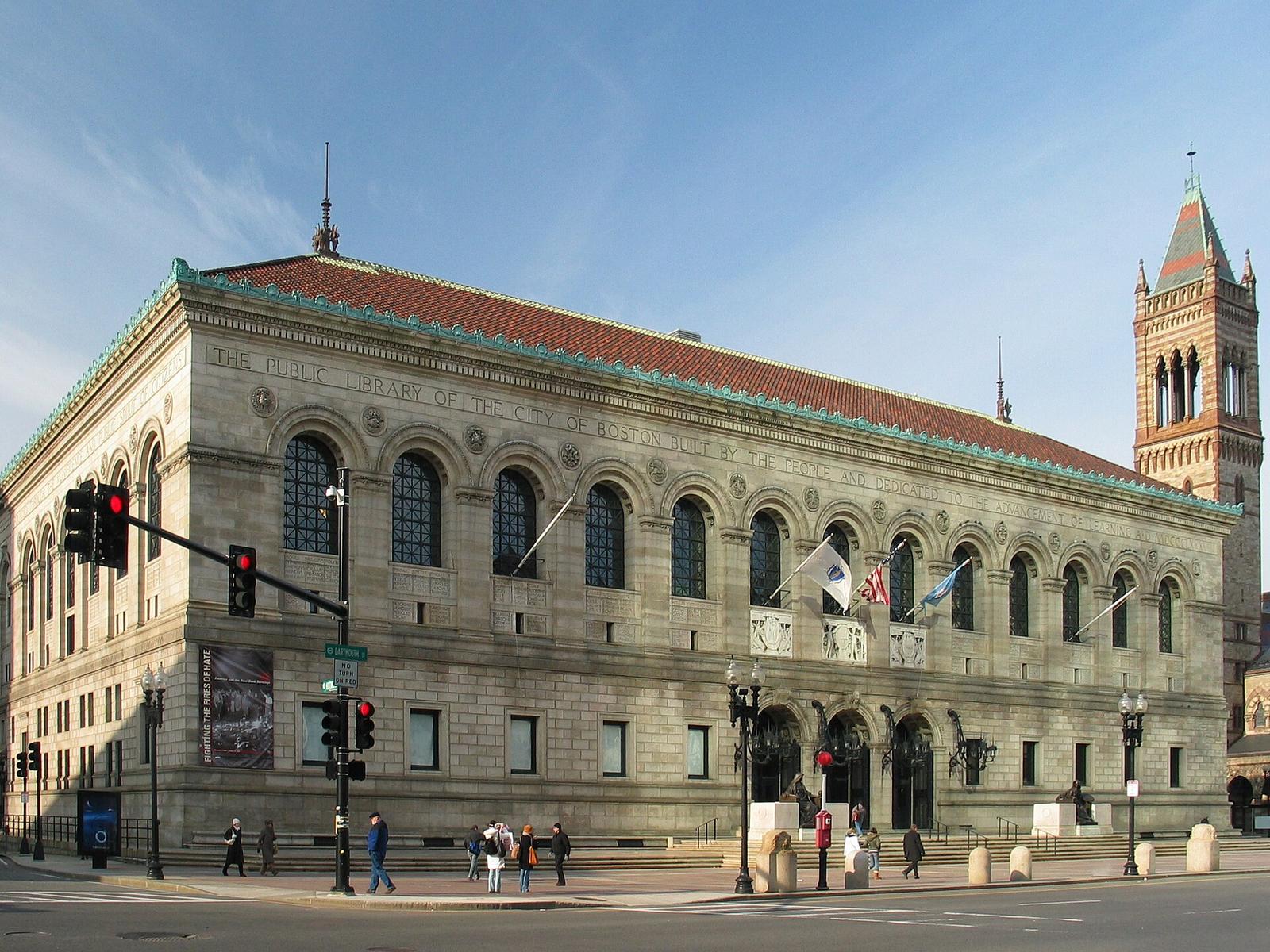
At the Dudley Square branch of the Boston Public Library on Warren Street in Roxbury, librarians have fielded a growing number of inquiries this spring from residents trying to understand why digitized images returned from third-party services no longer match the originals they submitted. The library's Digital Commonwealth program, which partners with the BPL to digitize historical collections, has flagged the problem internally, though the program has not yet issued public guidance specific to AI replacement tools.
The Hyde Square Task Force in Jamaica Plain, which runs youth and cultural programming rooted in the neighborhood's Dominican and Latino community, has heard similar concerns from families who used consumer apps to restore photos for quinceañera slideshows and anniversary displays, only to discover the software had silently substituted faces it deemed too degraded to render accurately. The organization has begun advising community members to retain raw scans before using any enhancement software, a step most people never think to take.
In East Boston, where recent census data shows roughly 52 percent of residents were born outside the United States, the stakes are especially high. Photos shipped from Central America, the Caribbean, and West Africa often arrive already faded; the temptation to run them through a free app before sharing them at a family gathering is understandable. The result, several residents have told community workers, is an image that looks better on a phone screen but bears no reliable resemblance to the person depicted.
What the software actually does, and what gets lost
Most consumer AI photo-restoration tools, including several with tens of millions of downloads globally, use a process called generative inpainting. When the software encounters a region it classifies as too damaged to reconstruct from existing pixel data, it fills in a plausible substitute drawn from its training data. For backgrounds and objects, that is often undetectable. For faces, particularly those of older individuals, darker skin tones, or people photographed in non-Western lighting conditions, the substitution can be dramatic and permanent if the user does not archive the original file first.
The MIT Media Lab, located on Amherst Street in Cambridge, has published research on bias in facial-reconstruction models, noting that training datasets have historically skewed toward lighter-skinned, younger subjects. That imbalance means the error rate for substitution is not evenly distributed: communities that are already underrepresented in archival photography bear a disproportionate share of the distortion.
There is no federal regulation governing the disclosure requirements for AI image replacement in consumer apps as of July 2026. The Massachusetts Attorney General's office has broad consumer-protection authority under Chapter 93A, but has not opened a formal inquiry into this specific practice.
For residents who have already lost an original, recovery options are limited. The BPL's Digital Imaging Studio on Boylston Street offers professional scanning services starting at rates the library posts on its website, and staff can advise on what metadata to preserve. The New England Historic Genealogical Society, headquartered on Newbury Street, maintains a help line for families trying to authenticate or recover historical images. Both organizations recommend submitting physical originals, not previously digitized versions, to avoid compounding any existing AI alteration. The simplest precaution, available right now, costs nothing: before touching any photo with an app, scan it and save the unedited file somewhere the software cannot reach.