The error had no warning label. For residents of Roxbury, Jamaica Plain, and Dorchester who rely on neighborhood digital archives, community bulletin boards, and city-linked platforms to document their streets and lives, the damage showed up the same way: a photograph they had uploaded — of a block party, a demolished building, a grandparent's face — replaced by a generic stock image that belonged to someone else entirely. The technical term is a duplicate-image replacement fault. The human cost is something harder to name.
The problem stems from an automated deduplication process used by several shared content management systems that serve municipal and nonprofit platforms across Boston. When the algorithm flags two images as visually similar above a set threshold, it replaces one with the other — keeping what it calculates as the higher-resolution or more frequently referenced file. Community archivists say the threshold was set too aggressively, and photographs with comparable color palettes or compositions were collapsed into a single canonical image, with originals discarded from active storage.
Who Got Hit and Where
The platforms affected include tools integrated with the City of Boston's Imagine Boston 2030 planning portal and several neighborhood association websites managed through third-party content hosts. Jamaica Plain Neighborhood Council's digital gallery and the Dudley Street Neighborhood Initiative's community memory project — both of which have spent years digitizing resident-submitted photographs of the Roxbury-Dorchester corridor — are among the organizations now auditing their holdings to assess losses.
For residents along Washington Street in Roxbury, where demolition and development have moved fast since 2022, the archive photographs were often the only documentation of storefronts, murals, and community spaces that no longer physically exist. A volunteer archivist working with the Dudley Street Neighborhood Initiative said the organization had submitted a formal incident report to its platform provider but had not yet received a response indicating how many files were unrecoverable. The Daily Boston is not identifying the archivist by name because they were not authorized to speak on behalf of the organization.
At the Hyde Square Task Force, which operates out of the Jackson Square area of Jamaica Plain and serves the neighborhood's substantial Latino community, staff said they first noticed something wrong in late June 2026 when a slideshow prepared for a community event pulled the wrong images. Program staff discovered that photographs submitted by residents over a two-year period had been partially replaced. The organization has not yet quantified total losses.
The Practical Stakes for Community Records
Digital preservation experts have long warned that community organizations face disproportionate risk from exactly this kind of automated error. Larger institutions — universities, hospitals, government agencies — typically maintain versioned backups and have IT departments that catch deduplication errors before they propagate. Neighborhood nonprofits operating on annual budgets under $500,000 frequently do not.
The Massachusetts Archives, located at Columbia Point in Dorchester, holds physical and digitized state records and has its own redundancy protocols, but it does not serve as a backup repository for the kind of informal community documentation that neighborhood groups produce. That gap means that when a platform-level error occurs, there is often no secondary source to restore from.
For residents, the advice from digital archivists is immediate and unglamorous: download everything you still have access to, now, before any further automated processes run. Check platform settings for a version history or trash folder — some systems retain deleted files for 30 to 90 days before permanent deletion. File a written incident report with your platform provider to create a paper trail, and contact the vendor's data recovery team directly rather than waiting for a general support response.
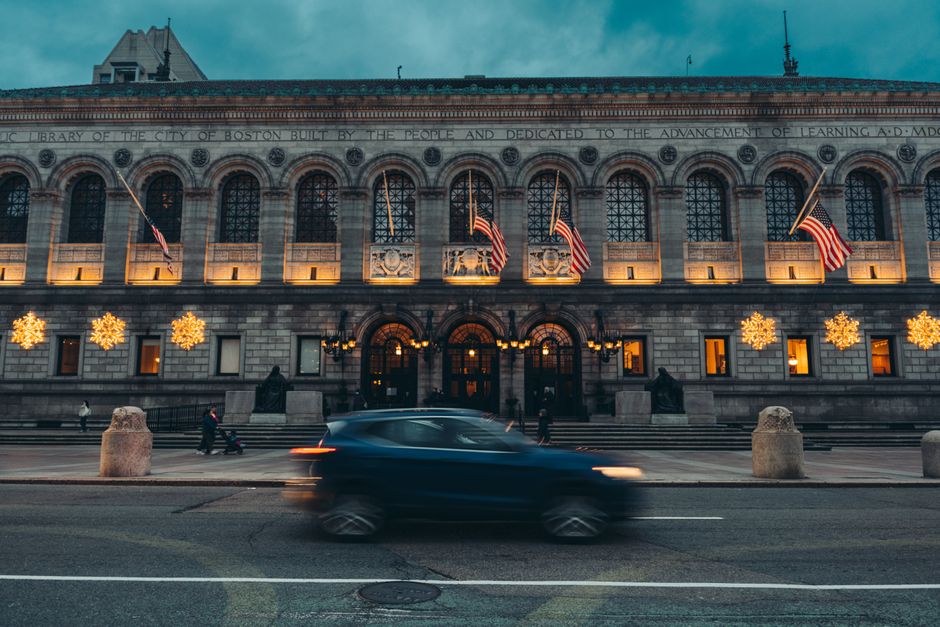
Community organizations in Boston can also contact the Boston Public Library's Digital Commonwealth program, headquartered on Boylston Street in Copley Square, which offers guidance on digitization standards and backup practices for nonprofits. The program does not restore lost files, but its staff can help organizations build systems that make this kind of loss less likely going forward.
The organizations affected are currently in contact with their platform providers. Several have indicated they expect to know the full scope of recoverable files within the next two to three weeks.