Boston's Office of Arts and Culture confirmed this spring that the city had identified more than 340 instances of duplicate or near-identical imagery across its public mural program, wayfinding signage network and MBTA station artwork installations — a problem that has cost the city measurable money in design contracts and is now the subject of a formal audit slated for completion by September 2026. The finding puts Boston in the company of a handful of global cities wrestling with the same unglamorous but expensive problem.
The issue matters now for a specific reason: the city is mid-stream in a $4.2 million public art capital investment tied to Mayor Michelle Wu's Boston Creates cultural plan, and procurement officials want to ensure that dollars flowing into neighborhoods like Jamaica Plain and Dorchester aren't paying twice for the same creative assets. Duplicate images — whether in printed wayfinding panels on Washington Street or in digital screens inside the Orange Line's Jackson Square station — represent both a budget inefficiency and, advocates argue, a missed opportunity to reflect genuine neighborhood identity.
Where Boston Is Getting It Right — and Where It's Behind
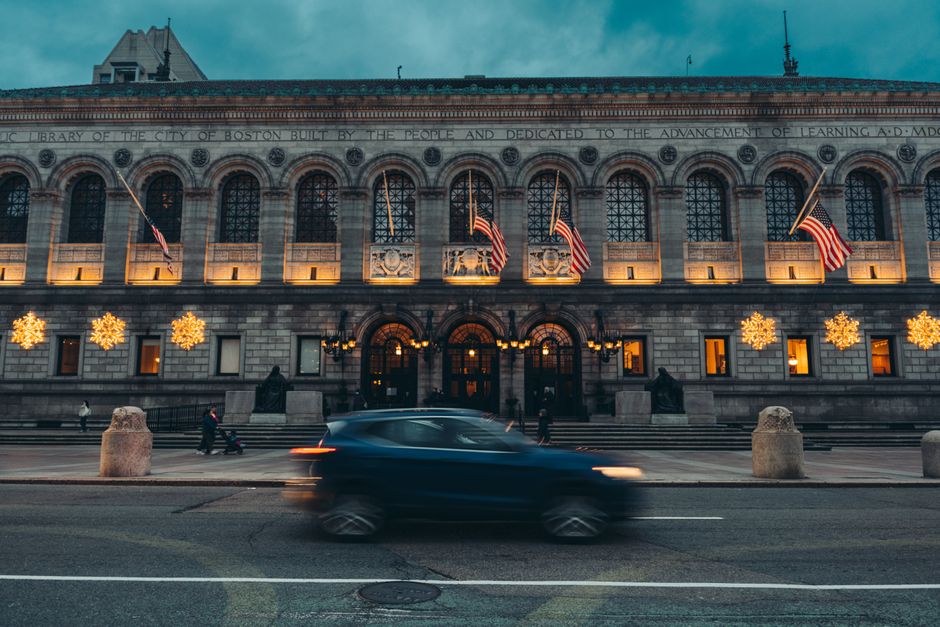
The city has moved faster than many peers on the detection side. The Boston Public Library's Digital Repository, housed at the Central Library on Boylston Street in Copley Square, began cross-referencing civic image assets against a shared municipal database in January 2026, a process modeled loosely on a system Amsterdam introduced in 2023 for its public art registry. That Dutch system flagged roughly 18 percent of the city's commissioned street-level works as duplicates or derivatives within its first operating year, according to Amsterdam's municipal cultural affairs directorate.
London's equivalent effort, run through the Greater London Authority's Culture and Creative Industries unit, has taken a different approach: a mandatory deduplication review built directly into commissioning contracts since 2024. Chicago launched a similar clause in its Department of Cultural Affairs and Special Events grant agreements in March 2025, requiring artists and vendors to submit image fingerprinting data alongside proposals. Boston has not yet embedded that requirement into its own contracting language, though the September audit is expected to recommend it.
Seoul offers perhaps the most advanced model. The city's Smart City division integrated AI-assisted image-matching into its public infrastructure renewal program ahead of the 2023 APEC meetings, and by late 2025 had reduced duplicate signage incidents across its 25 administrative districts by an estimated 61 percent, according to figures published by the Seoul Metropolitan Government. Boston's current process remains largely manual, relying on a small team within the Office of Arts and Culture cross-checking submissions against existing records — a bottleneck that the audit team has flagged as unsustainable given the volume of incoming proposals.
What Dorchester and Jamaica Plain Residents Can Expect
On the ground, the practical consequences are already visible. The Uphams Corner Arts Corridor in Dorchester, one of the city's most active mural zones, saw three commissioned works in 2024 and 2025 that incorporated nearly identical iconographic elements — a overlap that went undetected until a neighborhood arts council volunteer flagged it to city staff earlier this year. Jamaica Plain's Hyde Square, where the Wu administration invested in new bilingual wayfinding panels along Centre Street in 2024, had two panel designs that duplicated imagery from an earlier 2021 installation two blocks north on Lamartine Street.
City procurement officials are now piloting a pre-submission image review portal, expected to go live for vendors and artists by October 2026. The tool, built in partnership with Northeastern University's College of Arts, Media and Design, will allow applicants to check proposed images against an archive of existing city-commissioned work before contracts are signed. A similar vendor-facing portal in Chicago reduced duplicate submissions by roughly 30 percent in its first six months of operation, according to figures the Department of Cultural Affairs and Special Events published in its 2025 annual report.
For Boston artists, designers and community organizations planning public art proposals through the fall 2026 grant cycle — applications open August 15 — the practical advice is straightforward: document your source imagery thoroughly, and expect that deduplication review will become a standard step before approval rather than an afterthought.