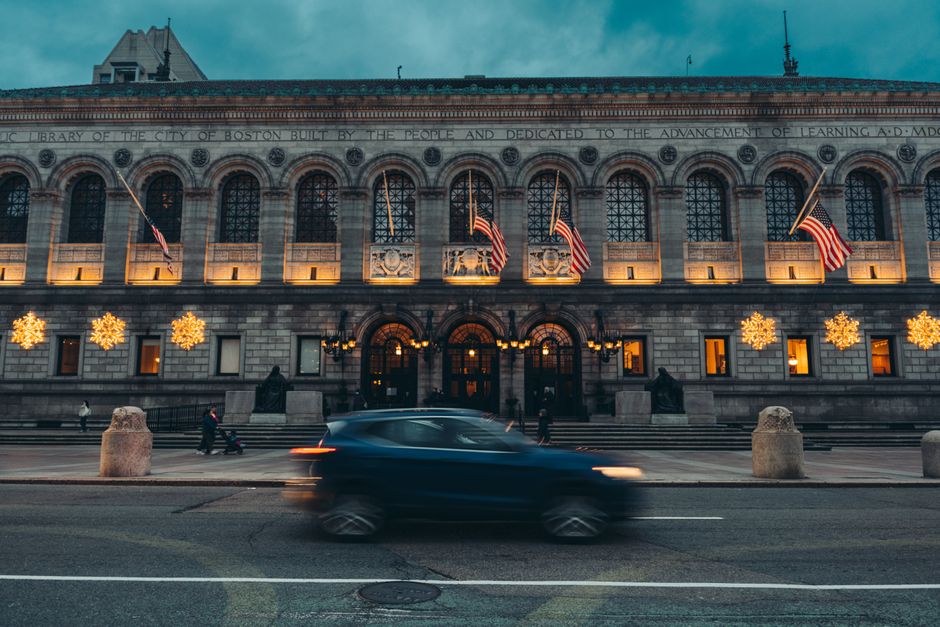
Boston's municipal archive system is sitting on a problem that has been quietly compounding for years: tens of thousands of duplicate, mislabeled, and unverified images scattered across city departments, from the Boston Planning Department's development files to the Boston Public Library's digital collections on Boylston Street. The question now is what gets done about it — and who pays.
The issue landed back on administrators' desks this spring after the BPL's Digital Commonwealth project flagged a significant overlap between newly scanned neighborhood photographs and existing catalog entries, particularly images from Roxbury, Dorchester, and Jamaica Plain dating to the urban renewal era of the 1960s and 1970s. Those neighborhoods are exactly where the city's current housing push is most active, making accurate historical documentation more than an archival nicety — it has direct bearing on demolition reviews, landmark designations, and community input processes.
Why the Backlog Matters Right Now
The timing is not accidental. Mayor Michelle Wu's administration has accelerated housing production targets in Jamaica Plain and Dorchester, triggering a wave of Article 80 development reviews that lean on photographic and documentary evidence to establish neighborhood character. When the same building appears in a catalog under three different addresses — or when a demolition applicant can cite an archived image that turns out to be a duplicate of a different property — the review process stalls or, worse, proceeds on faulty evidence.
The Boston Landmarks Commission, which operates out of City Hall and reviews applications under the city's Demolition Delay Ordinance, has flagged duplicate records as a procedural headache in at least two publicly documented cases involving properties along Centre Street in Jamaica Plain in the past 18 months. The commission does not have its own dedicated imaging staff; it relies on BPL collections and the city's GIS office on Cambridge Street.
Digital Commonwealth, the statewide digitization program administered through the BPL, has cataloged more than 300,000 images from Massachusetts institutions as of its most recent publicly available report. The BPL alone holds an estimated 1.8 million photographs. Even a conservative duplication rate of 3 to 5 percent — a figure cited in archival literature for large municipal collections — implies tens of thousands of records requiring human or algorithmic review.
The Decision Points Ahead
Three choices are now shaping up inside City Hall and at the BPL. First, whether to fund a dedicated deduplication contract — a line-item that was absent from the FY2026 city budget passed in June, which allocated roughly $145 million to the library system overall but did not carve out a specific digital remediation fund. Second, whether to deploy AI-assisted image-matching software, which several peer institutions including the New York Public Library have piloted with mixed results on large historical collections. Third, and most contentiously, who holds final authority when two departments hold conflicting versions of the same record — the BPL, the Landmarks Commission, or the city's Department of Innovation and Technology on City Hall Plaza.
The BPL's Rare Books and Manuscripts department has already begun a pilot review of roughly 4,000 images tied to the South End and Lower Roxbury from the 1950s onward, cross-referencing against the Boston City Archives on Boylston Street in West Roxbury. That pilot, which started in March 2026, is expected to produce a methodology recommendation by September. What happens after that recommendation lands is the real test — whether the administration treats it as a model for a citywide rollout or lets it sit on a shelf awaiting a budget cycle.
Community preservation advocates have pressed for public access to whatever deduplication methodology is adopted, arguing that neighborhoods like Dorchester and Roxbury have a direct stake in how their built environment is documented. The Boston Preservation Alliance, based in the Financial District, has hosted two public forums this year alone on gaps in the city's photographic record. For residents and developers alike, the practical upshot is straightforward: until the backlog is cleared and a governance structure is in place, any project that touches a historically sensitive site should expect longer review timelines and should budget accordingly for archival research costs that could run into the thousands of dollars per application.