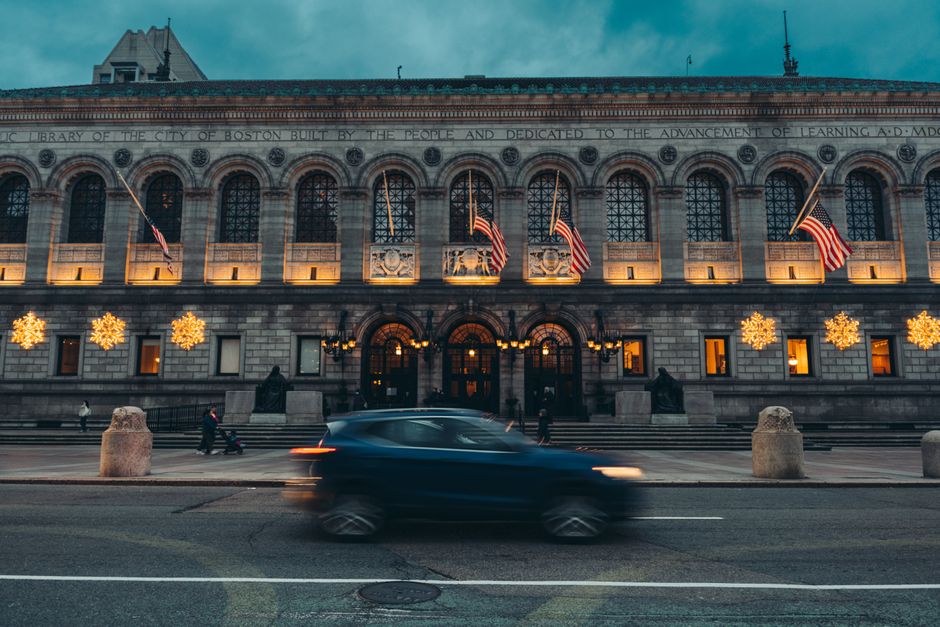
Boston is sitting on a bureaucratic time bomb. Across city departments, university archives, and the sprawling network of biotech campuses clustered around Longwood Medical Area, duplicate digital images — redundant photographs, scanned permit documents, drone survey shots, and planning maps filed multiple times under different file names — have piled up inside municipal and institutional databases without any unified policy to catch or remove them. Technology officers at several Boston agencies are now being pressed to act before the problem compounds further.
The timing matters because the city is mid-stride through an ambitious housing push. The Wu administration's ongoing rezoning efforts in Jamaica Plain and Dorchester have generated an unusually heavy volume of digitally submitted permit applications since late 2025, each carrying multiple image attachments. When the same photograph is filed under two names, or when a drone survey image is uploaded twice during revision cycles, it does not just waste storage — it creates conflicting records that can delay permit approvals and trigger legal challenges from abutters.
Where the Bottlenecks Are Forming
The Boston Planning Department's online permitting portal, which handles applications for everything from triple-decker conversions on Washington Street in Dorchester to new mixed-income blocks near the Forest Hills MBTA station in Jamaica Plain, has no automated deduplication layer. Staff reviewing applications must manually flag duplicate attachments, a process that stretches timelines. Boston Inspectional Services Division, headquartered on City Hall Plaza, is facing similar strain as construction activity accelerates. Neither agency has publicly released a target date for a technical fix, though city budget documents filed with the Boston City Council for fiscal year 2027 allocated funding toward a broader digital infrastructure upgrade for ISD.
The problem is not limited to government. Harvard University's planning and real estate offices in Allston, where the institution continues its decade-long campus expansion west of the Charles River, maintain their own image repositories for environmental filings submitted to the Massachusetts Environmental Policy Act office. Duplicate submissions there have historically required manual reconciliation between Harvard's internal teams and state reviewers — a friction point that slowed at least one major building approval cycle in 2024, according to documents in the MEPA public record. Northeastern University's facilities arm, managing new construction near the Ruggles MBTA station on Columbus Avenue, has reported analogous workflow issues in public presentations to the Boston Civic Design Commission.
Decisions That Will Define the Fix
Three choices now sit in front of city technology and planning leadership. First, whether Boston adopts a hash-based deduplication standard — a technical method that assigns each image file a unique digital fingerprint and blocks re-uploads of identical files — or relies on the slower route of vendor-managed storage audits. Second, whether the policy applies retroactively to the estimated hundreds of thousands of images already in city databases, or only to new submissions going forward. Retroactive cleaning is more expensive and carries legal risk if a purged image later proves relevant to a contested permit. Third, who owns the problem: the Mayor's Office of New Urban Mechanics, which has historically piloted city technology innovation since its founding under the Menino administration, or the individual departments where the duplicates are generating day-to-day friction.
The cost stakes are real. Cloud storage for municipal governments is not cheap. Mid-sized American cities with comparable digital permitting volumes have reported storage bills running into six figures annually when deduplication is absent, based on published municipal IT budget filings in cities including New York and Chicago. Boston's own fiscal year 2027 budget, passed by the City Council in June 2026, set total ISD technology spending at roughly $4.1 million — a figure that leaves limited headroom for a surprise storage overhaul.
The next formal checkpoint is a Boston City Council hearing on digital infrastructure, currently scheduled for late September 2026 in the Iannella Chamber at City Hall. Technology officers from ISD and the Planning Department are expected to present. Advocates for housing production speed — including groups that have pushed the Wu administration to cut permitting timelines in Dorchester and Roxbury — say that hearing is the best near-term opportunity to force a public commitment to a timeline. Whatever gets decided there will ripple directly into how fast Boston can actually build.