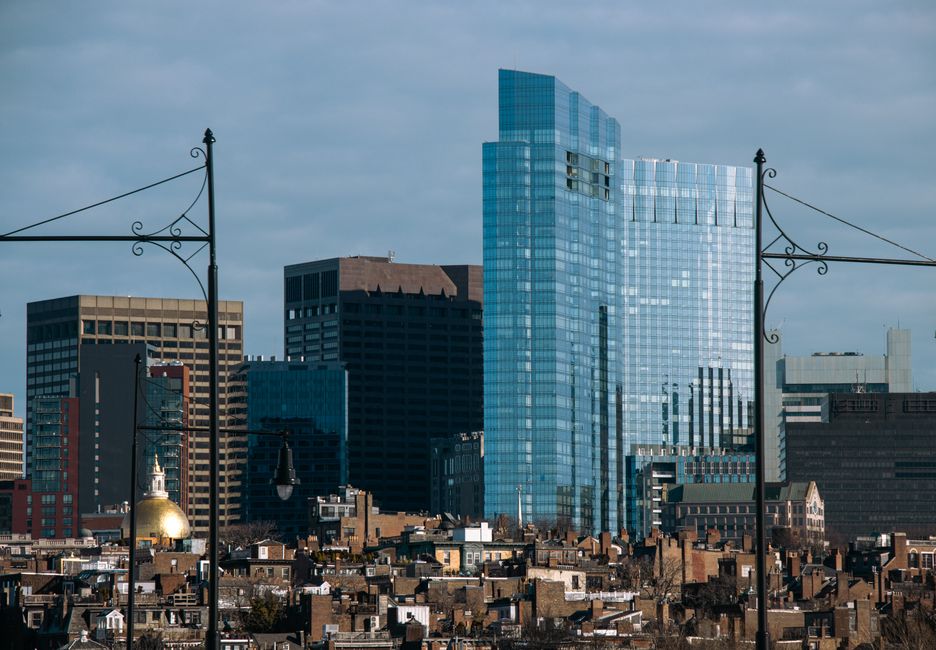
Boston's housing market in mid-2026 presents a paradox: prices remain elevated, yet momentum is fragmenting across neighbourhoods in ways that demand savvy navigation from buyers entering the market today.
The $780k median price masks significant geographic variation. Beacon Hill and Back Bay continue commanding premiums—properties on Mount Vernon Street or Newbury Street remain trophy assets—but it's the transformation story that's reshaping buyer calculus. South Boston's waterfront corridor, anchored by developments near the Institute of Contemporary Art, has attracted institutional capital and young professionals fleeing Cambridge's saturation. Meanwhile, Somerville, particularly around Union Square and Davis Square, has become the value-conscious alternative, though median prices there now reflect that shift.
Three factors are driving current dynamics. First, university expansion—Harvard, MIT, and Boston University's continued investments—creates persistent renter demand, inflating prices in adjacent areas like Cambridge and preventing the inventory corrections seen elsewhere. Second, institutional buyers remain active despite headlines about market cooling nationally. Empty land sales, as reported recently, signal developer confidence that land banking will yield returns; these aren't always owner-occupier transactions. Third, interest rate uncertainty is keeping some sellers sidelined, constraining supply just as summer buying season peaks.
For buyers, the practical implications are clear. Cash reserves matter more than ever; bidding wars persist in desirable pockets, and mortgage pre-approval is non-negotiable. The days of comfortably low offers have passed—properties in Beacon Hill still sell within 10-14 days of listing, and serious buyers are offering near-asking or above. However, neighbourhoods like Jamaica Plain and Roxbury offer relative relief, though buyers should scrutinize renovation timelines and neighbourhood infrastructure carefully.
Location arbitrage remains available for those flexible. Properties two transit stops from downtown Boston or near the Green Line offer better price-to-space ratios than downtown equivalents. The Seaport District's transformation has created expensive but walkable living; compare that to emerging neighbourhoods along the Orange Line extension in Somerville, where $650k buys what costs $950k closer to downtown.
The critical insight: Boston's market isn't uniformly hot or cool—it's diverging. Institutional investors are betting on urban cores and transit nodes; owner-occupiers seeking value must look further out. Rates remain volatile, but the real variable is neighbourhood-specific demand driven by employment hubs, university proximity, and transit access. Buyers who understand these micro-dynamics will find better opportunities than those chasing headline prices.
This article was compiled by AI and screened before publishing. See our editorial standards.