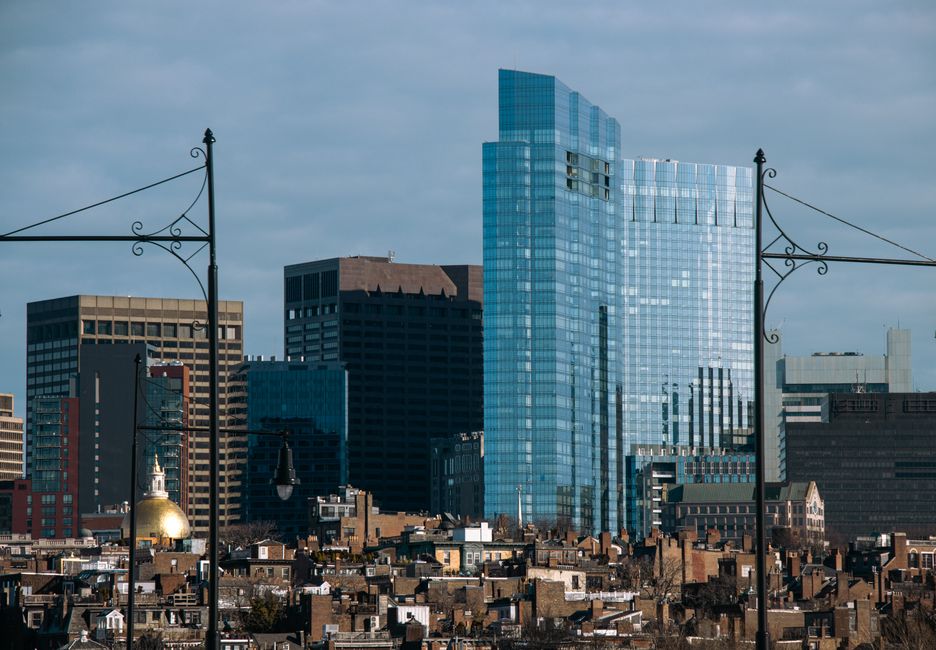
Boston's New Construction Boom: What Investor Yields Are Actually Returning
As development approvals surge across Somerville and South Boston, the numbers reveal a market where returns are tightening—and smart money is already pricing in reality.
As development approvals surge across Somerville and South Boston, the numbers reveal a market where returns are tightening—and smart money is already pricing in reality.

The cranes are out in force across Greater Boston, but the story beneath the skyline is more nuanced than headlines suggest. While the city's development pipeline has reached its strongest point in a decade, investor yields on newly completed residential projects are compressing in ways that challenge the narrative of unchecked market exuberance.
Consider the data: A 320-unit mixed-use development on the Innerbelt in Somerville, completed earlier this year, is delivering gross rental yields of approximately 3.2 percent—down from the 4.1 percent baseline that attracted capital two years ago. Similar compression is visible across the Seaport and in South Boston's ongoing transformation, where new one-bedroom units are leasing at $2,100 monthly against replacement costs now exceeding $650,000 per unit.
The approval picture tells part of the story. The Boston Planning & Development Agency has green-lit 847 residential units across 12 major projects in 2026 alone—a 34 percent increase on last year. Somerville and Cambridge, riding demand from university expansion and tech sector spillover, account for nearly 40 percent of that pipeline. Yet construction costs have risen 8 percent year-on-year, while rental growth has plateaued at 2.3 percent annually.
For institutional investors, the mismatch is forcing a reset. A portfolio manager tracking Beacon Hill and Back Bay acquisitions noted that value-add plays—the bread and butter of the development space—now require lease-up periods 18 months longer than 2023 models assumed. The median Boston property price of $780,000 has created a secondary tier of interest in adjacent neighborhoods, but margins there are tighter still.
The shift is visible in where capital is flowing. Mixed-income developments with affordable housing components—driven by local policy and community benefits agreements—are attracting long-term institutional money content with 2.8 percent yields, while pure-market-rate plays above the median are seeing investor scrutiny intensify. Projects on Cambridge Street and along the Green Line corridor are moving forward, but at lower projected returns than comparable deals would have commanded eighteen months ago.
The lesson for Boston's development sector is clear: approvals and construction activity are not proxies for investor enthusiasm. As the city's growth story matures, yield compression is separating serious players from speculative capital. For developers and local authorities watching the pipeline, that sorting is exactly what a functioning market looks like—and it may be precisely what the region needs as it calibrates growth against affordability and infrastructure reality.
This article was compiled by AI and screened before publishing. See our editorial standards.
How does this story make you feel?
Spread the word
About this article
Published by The Daily Boston
Daily brief
Free, in your inbox before 7am. Weekdays.
More in Property