Why Boston's Fintech Ecosystem Punches Above Its Weight on the Global Stage
A convergence of legacy banking expertise, elite universities, and venture capital is positioning the city as the unlikely epicenter of financial innovation.
A convergence of legacy banking expertise, elite universities, and venture capital is positioning the city as the unlikely epicenter of financial innovation.
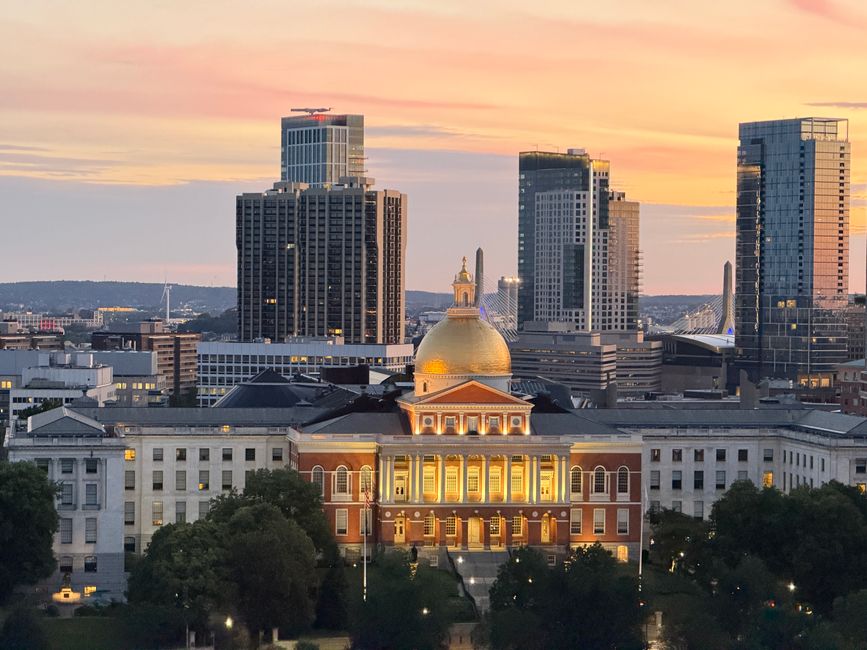
Walk through the Financial District on a Tuesday morning, and you'll see the old guard-State Street, Fidelity, Boston Private-rubbing shoulders with a new generation of fintech disruptors. That collision of worlds is precisely what makes Boston's financial technology ecosystem distinctly powerful in ways that Silicon Valley's venture-fueled startups simply cannot replicate.
The numbers tell part of the story. Boston attracted $2.8 billion in fintech venture funding last year, placing it third nationally behind only New York and San Francisco. But venture capital alone doesn't explain the city's outsized influence. What does is institutional depth.
Consider the talent pipeline. MIT's Sloan School of Management and Harvard Business School graduate roughly 800 MBAs annually with fintech interests. Many stay local, filling roles at both established institutions and 200-plus fintech startups now headquartered in the metro area. When startups need expertise in regulatory compliance, institutional-grade security, or payment systems architecture, they're drawing from a labor pool shaped by decades of banking infrastructure work.
Then there's the real estate dimension. A modest two-person team operating from WeWork's Prudential Center location pays around $3,500 monthly-roughly half what comparable space costs in Manhattan. That affordability, combined with proximity to Seaport District's dense cluster of fintech offices, creates organic networking opportunities impossible to manufacture through accelerator programs alone.
The institutional partnerships matter too. Unlike other tech hubs where traditional finance and startups maintain arm's-length relationships, Boston's ecosystem thrives on integration. Established firms like Fidelity and State Street have dedicated innovation labs that actively acquire emerging technologies rather than simply monitoring them. This creates a feedback loop where startups aren't just disrupting the incumbents-they're collaborating with them.
Recent focus areas reveal this sophistication. Boston-based fintech firms are increasingly tackling infrastructure-level problems: blockchain interoperability, real-time payment rails, and institutional-grade wealth management platforms. These aren't consumer-facing apps; they're the unglamorous plumbing that moves trillions annually. That unglamorous focus actually signals maturity.
The city's regulatory environment helps too. Massachusetts regulators, informed by centuries of banking history, take measured approaches to innovation rather than blanket restrictions or permissive laissez-faire policies. That balance attracts serious builders.
What Boston offers globally isn't the flashy disruption narrative. It's something rarer: a place where financial innovation happens in dialogue with the institutions that actually move capital. That conversation, rooted in this particular city's history and infrastructure, remains largely inimitable.
This article was compiled by AI and screened before publishing. See our editorial standards.
How does this story make you feel?
Spread the word
About this article
Published by The Daily Boston
Daily brief
Free, in your inbox before 7am. Weekdays.
More in tech


