Boston's Smart City Dream Attracts Record Venture Capital as Tech Giants Race to Build the Future
From the Seaport to Cambridge, venture investors are pouring hundreds of millions into municipal digital infrastructure, reshaping how cities operate.
From the Seaport to Cambridge, venture investors are pouring hundreds of millions into municipal digital infrastructure, reshaping how cities operate.
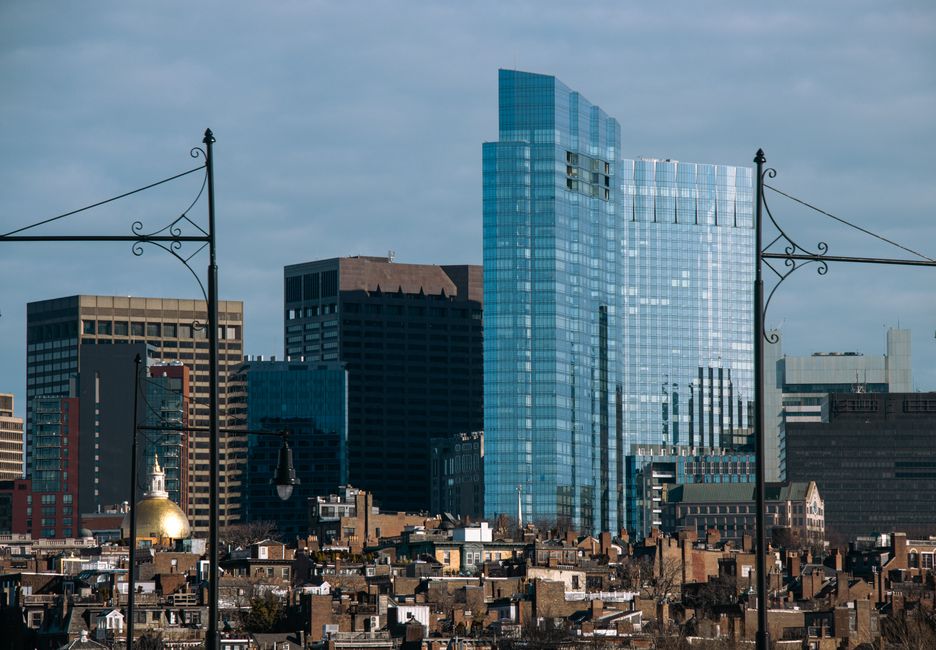
Boston's transformation into a laboratory for smart city technology is attracting unprecedented investment. Over the past 18 months, venture capital flowing into municipal digital infrastructure—from intelligent traffic systems to IoT-enabled utilities—has exceeded $380 million, according to data compiled by the Massachusetts Technology Leadership Council. That figure represents a 240 percent increase from the same period two years ago.
The momentum reflects a broader national trend, but Boston's particular advantages—proximity to MIT and Harvard, an established biotech corridor, and a city government increasingly open to innovation partnerships—have made it a magnet for founders and investors alike. "We're seeing a fundamental shift," says one prominent venture partner focused on govtech, whose firm recently opened a dedicated innovation hub near Dewey Square. "Cities aren't just procuring technology anymore. They're becoming platforms."
The Seaport District has emerged as the epicenter. What was a derelict waterfront a decade ago now hosts more than a dozen govtech startups, many backed by Series A and B rounds exceeding $15 million each. These companies are developing solutions for congestion management, parking optimization, and energy grid modernization—problems that plague aging American cities.
Cambridge has become equally critical. The city's partnership with local universities on autonomous vehicle testing and smart traffic pilot programs has attracted engineers and entrepreneurs who might otherwise relocate to San Francisco or Austin. One recent initiative, a $25 million municipal sensor network spanning from Harvard Square to Fresh Pond, is being underwritten partially by venture funds and partially by city bonds.
Yet the investment surge raises questions about sustainability and equity. While venture capital has fueled rapid innovation, it often prioritizes wealthy, downtown neighborhoods. Roxbury and Mattapan, where broadband gaps remain significant, have received a fraction of the investment attention flowing to the Financial District. City leaders acknowledge the imbalance, with Boston's chief information officer recently pledging to direct 30 percent of future smart city budgets toward underserved communities.
Industry analysts expect venture funding in govtech to accelerate further. The global smart city market was valued at roughly $375 billion in 2024 and is projected to grow 15 percent annually through 2030. Boston's early-mover advantage—combined with a regulatory environment that permits experimentation—positions the city to capture an outsized share of that growth.
For investors and entrepreneurs, the bet is clear: cities represent the next frontier for technology scale. Boston, having proved it can attract capital and talent, is racing to ensure it leads rather than follows.
This article was compiled by AI and screened before publishing. See our editorial standards.
How does this story make you feel?
Spread the word
About this article
Published by The Daily Boston
Daily brief
Free, in your inbox before 7am. Weekdays.
More in tech


