Why Boston's Fintech Ecosystem Punches Above Its Weight on the Global Stage
A potent blend of academic firepower, institutional capital, and immigrant entrepreneurship gives the city an edge in financial technology that rivals Silicon Valley.
A potent blend of academic firepower, institutional capital, and immigrant entrepreneurship gives the city an edge in financial technology that rivals Silicon Valley.
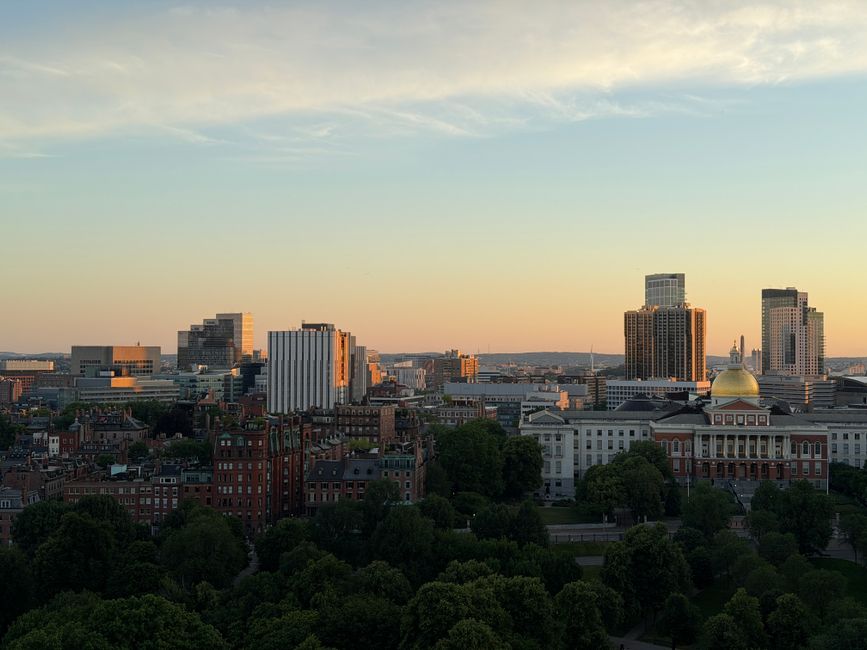
Walk down Hanover Street in the Financial District and you'll see the visible architecture of Boston's fintech dominance: gleaming office towers housing everything from blockchain startups to AI-driven wealth management platforms. But the real story of why this city has become a global fintech powerhouse lies deeper—in the convergence of three factors largely absent from other tech hubs.
First, there's the academic-industry nexus. MIT and Harvard aren't peripheral to Boston's fintech scene; they're foundational. The density of computer science PhDs and business school graduates with deep financial services knowledge creates a talent pipeline unmatched elsewhere. Companies like Stripe, while headquartered in San Francisco, deliberately maintain significant engineering teams here specifically to tap this talent pool. The city's median tech salary of $145,000 remains competitive partly because workers accept slightly lower compensation in exchange for proximity to world-class universities and cutting-edge research labs.
Then there's institutional capital. Boston hosts some of the world's largest asset managers—Fidelity, Putnam, Wellington—which aren't just customers of fintech innovation; they're active investors in it. This creates a unique feedback loop. When a Cambridge-based startup developing algorithmic trading software needs early customers and capital, those institutions are literally down the road. The Massachusetts Venture Capital Association reported $8.2 billion in venture funding across the state last year, with fintech capturing roughly 22% of that.
But perhaps most distinctive is Boston's role as a gateway for immigrant entrepreneurship in fintech. The city's large Indian, Chinese, and Brazilian communities have produced an outsized number of fintech founders who understand both Western regulatory environments and emerging markets. This global perspective—essential in an industry increasingly built around cross-border payments and alternative banking—gives Boston companies an advantage in expanding internationally that pure West Coast competitors often lack.
The physical geography matters too. Unlike San Francisco's sprawl, Boston's concentrated Financial District, downtown Cambridge, and Kendall Square innovation zone sit within walkable distance. This density accelerates the informal knowledge exchange that fuels innovation. Coffee at Thinking Cup on Milk Street might involve conversations between a Fidelity technologist, a Harvard postdoc, and a founder—the exact collision that births breakthrough ideas.
As global fintech competition intensifies in 2026, Boston's distinctive advantage isn't raw venture capital or regulatory proximity. It's an ecosystem where academic rigor, institutional sophistication, global perspective, and geographic concentration converge. That combination remains difficult to replicate elsewhere.
This article was compiled by AI and screened before publishing. See our editorial standards.
How does this story make you feel?
Spread the word
About this article
Published by The Daily Boston
Daily brief
Free, in your inbox before 7am. Weekdays.
More in tech


