Boston's Tech Boom Masks Darker Questions About Innovation's Real Cost
As venture capital floods Seaport and Cambridge's innovation corridors, local entrepreneurs and ethicists grapple with unexamined risks that venture funding rarely addresses.
As venture capital floods Seaport and Cambridge's innovation corridors, local entrepreneurs and ethicists grapple with unexamined risks that venture funding rarely addresses.
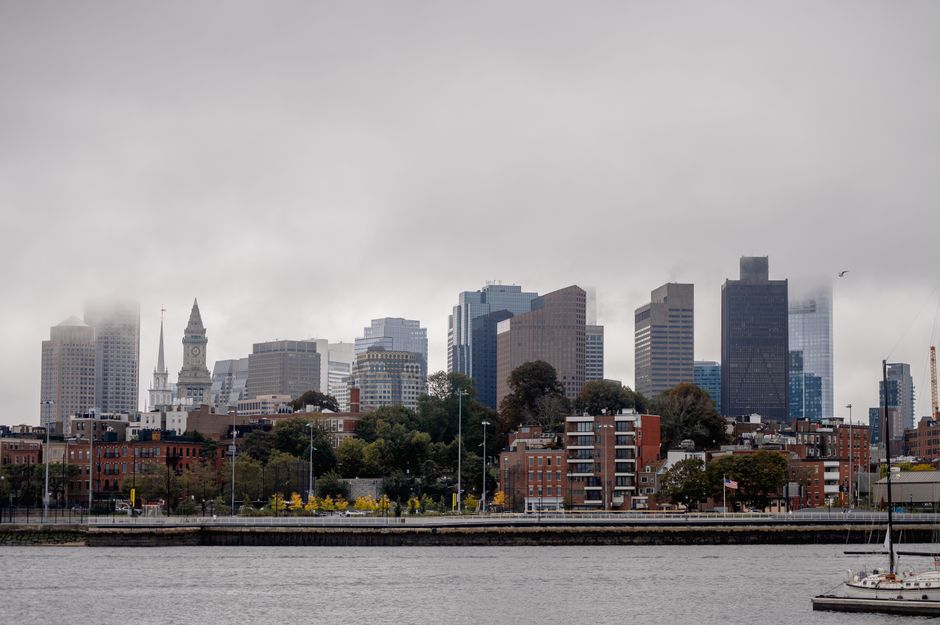
Boston's technology sector is booming. The Seaport District now hosts over 450 tech companies, up from fewer than 100 a decade ago. Cambridge's Kendall Square remains one of the world's most expensive innovation hubs, with office space commanding $80 per square foot annually. Yet beneath the gleaming glass facades and soaring valuations lies a question Boston's tech establishment increasingly cannot ignore: what are we actually building, and for whom?
The tension became impossible to overlook this spring when a Massachusetts-based artificial intelligence startup, operating from a converted warehouse on Fort Point Channel, quietly shelved a facial recognition project after internal concerns emerged about its deployment in immigration enforcement scenarios. The decision came only after months of development, significant capital expenditure, and employee dissent-a pattern increasingly visible across Boston's innovation corridors.
"We celebrate technological advancement without asking whose interests it serves," said Sarah Chen, director of the Boston Tech Ethics Coalition, an advocacy group launched last year from an office near South Station. "A startup can raise $20 million on a Tuesday and deploy technology affecting thousands of people by Friday, with almost no oversight mechanism in place."
The challenge extends beyond artificial intelligence. Data privacy concerns plague the health tech sector clustered around the Longwood Medical Area. Labor displacement anxieties ripple through automation companies headquartered along Route 128. And venture capital's relentless pressure to scale quickly-Boston VCs deployed $9.2 billion across the region in 2025 alone-incentivizes speed over societal consideration.
Boston's universities, traditionally voices for ethical technology development, find themselves compromised by deep financial entanglement with the venture ecosystem. MIT's D-Lab, which explicitly focuses on technology for global development, operates within an institution where corporate partnerships and startup equity stakes have become institutional business model features.
What distinguishes this moment is neither the problems themselves nor Boston's awareness of them. Rather, it is the dawning recognition that innovation's promise-job creation, efficiency gains, scientific advancement-cannot be decoupled from its risks: algorithmic bias, worker displacement, privacy erosion, and concentration of power among well-capitalized entrepreneurs.
Some Boston firms are responding seriously. A handful of companies now employ ethics consultants before rather than after deployment. Industry forums on responsible innovation have gained attendance. Yet these remain exceptions rather than norms, and they operate without binding standards or consequences for failure.
As Boston competes with San Francisco and New York for startup dominance, the city faces a distinctive choice: amplify the cycle of innovation-first-ethics-later, or build something different-a genuine innovation ecosystem where societal benefit and risk management are features, not afterthoughts.
This article was compiled by AI and screened before publishing. See our editorial standards.
How does this story make you feel?
Spread the word
About this article
Published by The Daily Boston
Daily brief
Free, in your inbox before 7am. Weekdays.
More in tech


