Crossroads Ahead: Dorchester's West Broadway Corridor ...
Community leaders and city planners must decide whether to approve a mixed-use project that promises affordable housing but threatens longtime businesses.
Community leaders and city planners must decide whether to approve a mixed-use project that promises affordable housing but threatens longtime businesses.
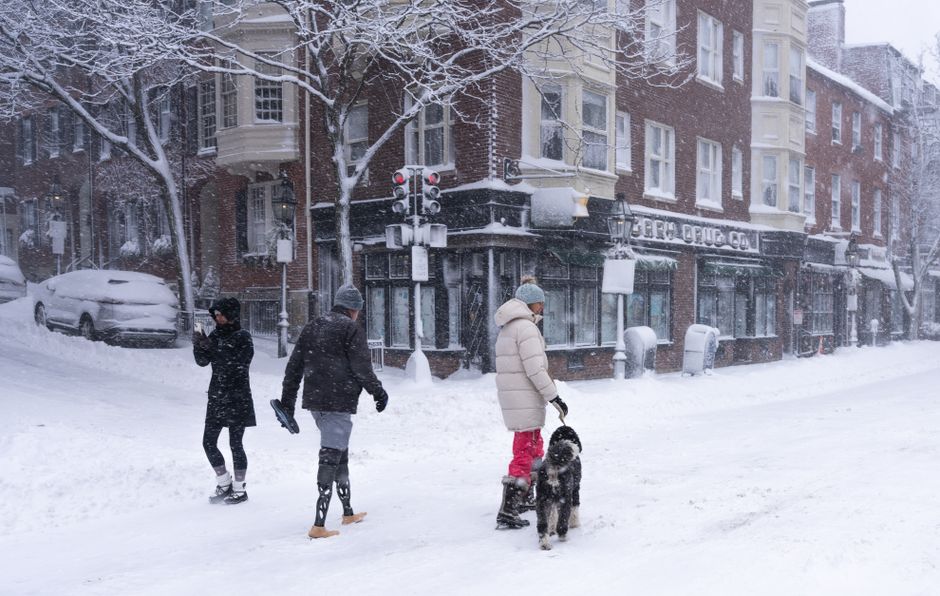
The stretch of West Broadway between Dot Avenue and Ashland Street in Dorchester has long been the neighborhood's commercial spine—a corridor where family-owned restaurants, corner markets, and service shops have anchored community life for decades. But that familiar landscape now stands at a crossroads.
A proposed $280 million mixed-use development would reshape three full blocks, replacing aging commercial structures with a 22-story residential tower, street-level retail, and 180 units of deed-restricted affordable housing. The Boston Planning & Development Agency is set to hold a final hearing in September, making decisions now crucial to the project's fate.
The numbers underscore why this matters. Dorchester's median rent has climbed to $1,850 monthly, up 34% since 2020, according to recent data from the Boston Housing Authority. The proposed development would lock in roughly 120 units at permanently affordable rates—a rarity in a neighborhood where longtime residents face displacement pressures. Yet the project requires demolition of seven active businesses, including Maria's Deli, operating since 1987, and Chen's Auto Repair, a fixture since 1994.
"This is the conversation every Boston neighborhood is having right now," said James Murphy, executive director of the Dorchester Community Advocacy Center, a nonprofit that has facilitated discussions between developers and residents. "How do we build the housing we desperately need without erasing what makes a neighborhood itself?"
The decision hinges on three unresolved questions. First: relocation assistance. The developer has offered $150,000 per business to relocate, but commercial real estate brokers suggest comparable West Broadway space costs $25-30 per square foot—often double what small businesses currently pay. Second: the retail component. Community groups are pushing for 50% local merchant priority in ground-floor leasing; the developer's current proposal guarantees only 30%. Third: the housing mix. Advocates want more units priced below 50% of area median income; the project currently targets 60% AMI for most affordable units.
City Councilor Michael Flaherty has indicated he'll make the project's community benefit package a campaign priority heading into the September hearing. Meanwhile, the Dorchester Business Association is organizing listening sessions at venues like the Codman Square Public Library and Ashmont Grill to gather resident input.
The outcome will reverberate beyond West Broadway. Boston has identified Dorchester as a potential site for 1,200 additional housing units by 2030. How the city handles this first major test—balancing growth with continuity—could set the template for neighborhoods citywide.
This article was compiled by AI and screened before publishing. See our editorial standards.
How does this story make you feel?
Spread the word
About this article
Published by The Daily Boston
Daily brief
Free, in your inbox before 7am. Weekdays.
More in News