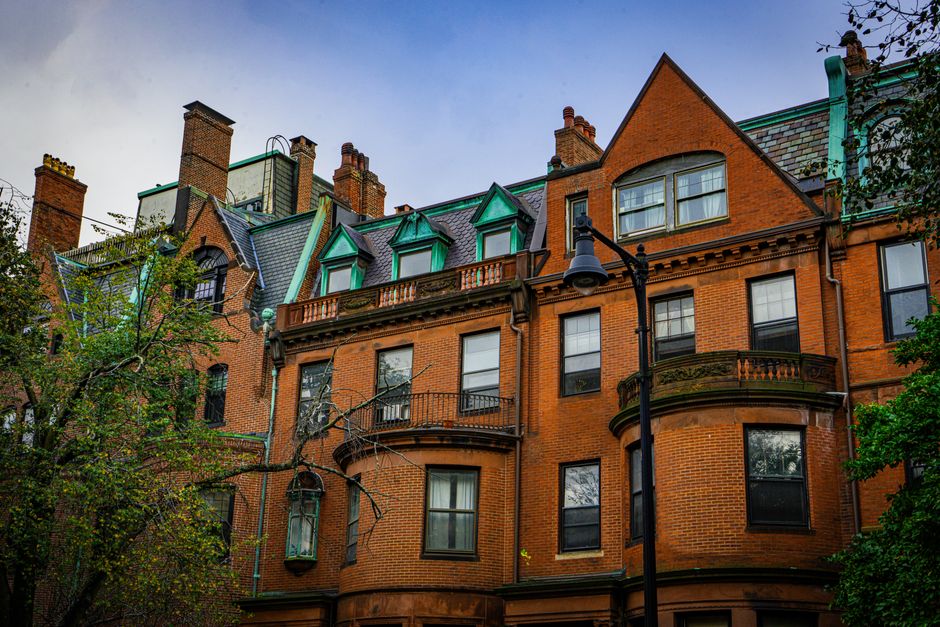
Boston's property market has long followed predictable rhythms—Beacon Hill commands premiums, Cambridge stays university-anchored, South Boston transforms. But this year, a series of planning decisions and zoning amendments are rewriting the investment playbook, creating winners and losers across the metro in ways that defy traditional prestige hierarchies.
The catalyst: Somerville's updated zoning code, effective March 2026, that permits mixed-use development and triples permitted density in transit corridors along the Green Line Extension. Within weeks, acquisition activity accelerated on Davis Square and along Holland Street, with properties that stalled at $1.2m–$1.5m in 2025 now moving at $1.7m–$1.9m. Local commercial brokers report landlords upgrading older walk-ups with renovation investment, betting on regulatory tailwinds rather than speculative holding.
Meanwhile, South Boston's waterfront chapter closed differently. The city's new Inclusionary Development Policy—requiring 18% affordable units in projects over five units—made pencil-economics tighter for speculative developers. Yet paradoxically, it accelerated institutional investment. Since January, two major pension funds and a Boston-based REIT have acquired parcels near the Harborwalk, favouring long-term, mixed-income strategies over quick flips. The median price for new-build condos near A Street has actually retreated 3–4% from late 2025 peaks, but transaction volume suggests a reset toward fundamentals rather than a crash.
Back Bay and Beacon Hill, by contrast, face headwinds from a different policy: the Architectural Conservation District enhancement that tightened façade and extension guidelines. Applications that sailed through in 2024 now face six-month reviews. Several renovation projects on Louisburg Square and Mount Vernon Street have been shelved or scaled back, creating a secondary effect—fewer gut-renovations mean less aggressive pricing, and fewer international cash-buyers chasing ultra-premium units. The neighbourhood median holds near $2.1m, but velocity has slowed.
Cambridge presents a third model entirely. The city council's recent decision to streamline permits for adaptive-reuse projects near Kendall Square and along the Charles River has unlocked investor appetite for pre-war industrial buildings. Three major office-to-residential conversions are underway, signalling a belief that regulatory clarity trumps short-term uncertainty.
For investors watching these moves, the lesson is clear: policy now matters more than postcode. Neighbourhoods with streamlined approval processes and clear development frameworks—Somerville, South Boston's institutional pockets—are attracting capital. Meanwhile, areas where regulation tightens are seeing price corrections that may signal value plays for patient buyers. The median city-wide USD 780k figure masks a fragmented market where your returns depend less on whether you're in Cambridge or Charlestown, and more on whether your neighbourhood's planning department is accelerating or braking.
This article was compiled by AI and screened before publishing. See our editorial standards.