Boston's New Developments Are Finally Delivering ...
As construction approvals accelerate across Seaport and Somerville, investor yields are climbing—but geography matters more than ever.
As construction approvals accelerate across Seaport and Somerville, investor yields are climbing—but geography matters more than ever.
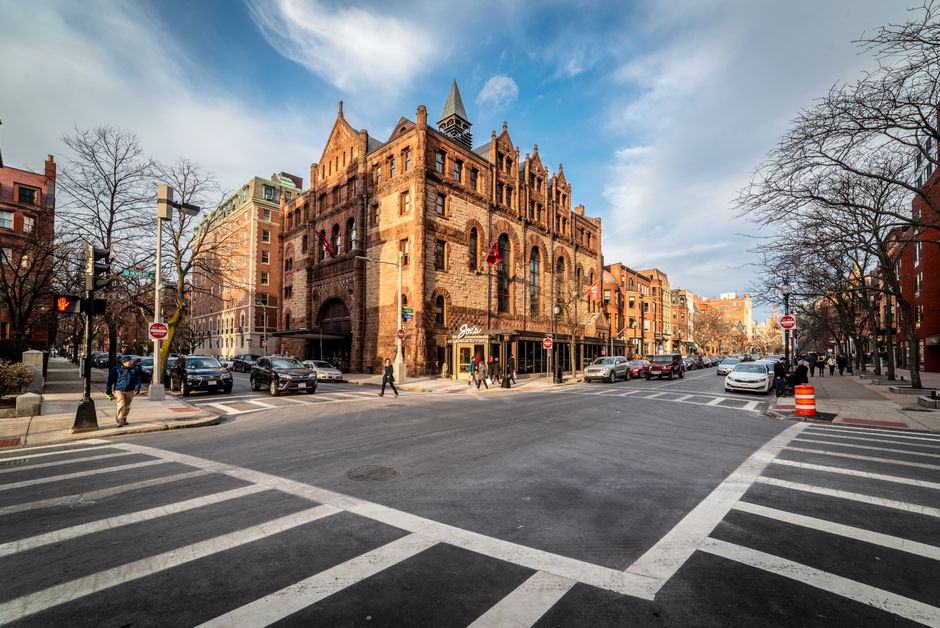
Boston's development pipeline is humming again, and for the first time in three years, patient capital is seeing real returns. Recent approvals for mixed-use projects in the Seaport District and along the Green Line corridor suggest that investors who bet on Boston's post-pandemic slowdown are beginning to collect.
The data tells a compelling story. Properties approved for development in 2024–2025 are now showing rental yields between 4.2 and 5.1 percent—a significant improvement from the 2.8 percent average seen in 2023. For residential investors, this matters. A $2.4 million one-bedroom in a newly completed Seaport tower can now generate $120,000 in annual rental income, a figure that would have seemed unrealistic two years ago.
But yields aren't uniform across Boston. The Beacon Hill and Back Bay premium markets, already commanding median prices near $950,000, have seen modest yield improvements of just 0.3 percentage points. The real action is in Somerville and Cambridge, where new approvals for mid-rise residential near Davis Square and Central Square are attracting institutional investors. Cambridge's recently approved 240-unit development on Massachusetts Avenue is expected to achieve 4.8 percent yields—enough to move the needle for large portfolios.
South Boston's transformation continues to drive approvals, particularly along the Fort Point Channel waterfront. Three projects totaling 680 units received zoning approval in the past eighteen months, with projected rents ranging from $2,100 for studios to $4,200 for two-bedrooms. Investors tracking these assets report internal rates of return climbing toward 7 percent when factoring in appreciation.
What's shifted? Supply. Boston issued approximately 3,200 residential unit approvals in 2025, double the 2023 figure. This increase is tempering price growth—the median has stabilized near $780,000—but creating rental competition that rewards new, amenity-rich buildings. Older stock in less-connected neighborhoods faces headwinds; newer construction in transit-rich areas thrives.
The university-driven demand sustaining Cambridge and Somerville remains intact, with Harvard, MIT, and Boston University expansion plans anchoring long-term leasing appetite. Developers are responding. The approval pipeline for student-oriented housing near Kendall Square and in North Cambridge now exceeds 900 units.
Still, macro uncertainty persists. Interest rates and regulatory momentum will shape whether these approval-stage yields materialize. But for now, Boston's development engine is delivering the one thing investors crave: momentum and measurable returns.
This article was compiled by AI and screened before publishing. See our editorial standards.
How does this story make you feel?
Spread the word
About this article
Published by The Daily Boston
Daily brief
Free, in your inbox before 7am. Weekdays.
More in Property