Boston's Living Archives: How Deep Historical Roots Are Reshaping the City's Creative Identity
From the Greenway to Roxbury's arts corridors, cultural institutions are mining local heritage to forge a distinctly Boston creative future.
From the Greenway to Roxbury's arts corridors, cultural institutions are mining local heritage to forge a distinctly Boston creative future.
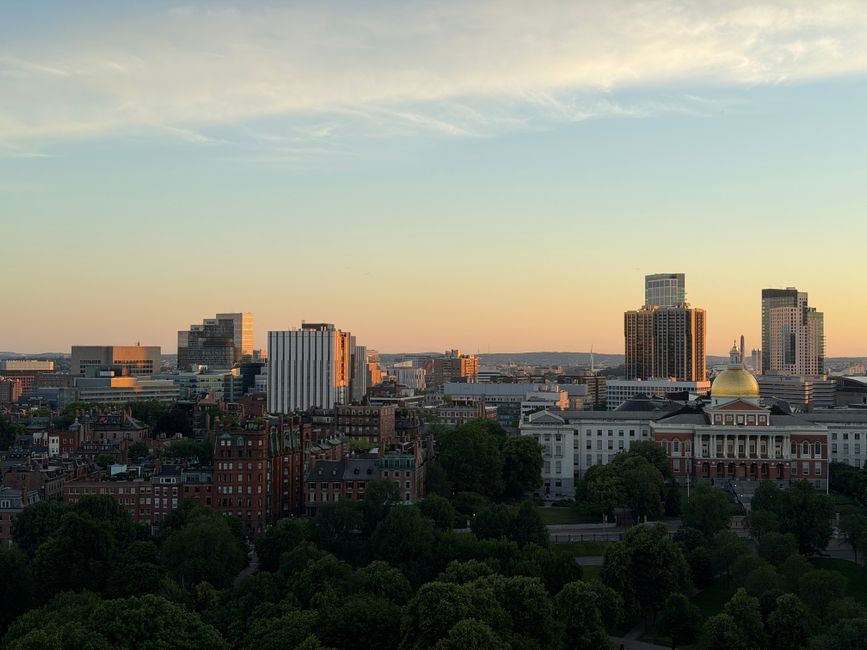
Walk through Boston's neighborhoods today and you'll encounter a paradox: the city's most innovative cultural spaces are those most deeply rooted in its past. This tension—between preservation and invention—is becoming the defining characteristic of Boston's creative identity as we move through 2026.
The shift is visible along the Rose Kennedy Greenway, where the Institute of Contemporary Art at Boston's Harborwalk draws nearly 400,000 visitors annually. But increasingly, these audiences venture into adjacent neighborhoods to experience cultural institutions that explicitly anchor contemporary work in local history. The Phillis Wheatley House in the West End, painstakingly restored and reopened as a creative residency in 2024, now hosts artists examining identity, freedom, and voice—themes inseparable from the poet's own story and Boston's complicated relationship with its revolutionary past.
In Roxbury, the Hibernian Hall and the nearby Harriet Tubman House have become anchors for a cultural corridor that blends archival research with performance art, visual installations, and community-driven projects. According to data from the Boston Cultural Council, programming in historically significant Roxbury venues has grown by 38 percent since 2022, with attendance from younger demographics (under 35) comprising nearly 60 percent of audiences. Ticket prices remain accessible—typically $15 to $25—reflecting a conscious effort to make historically-grounded culture available beyond affluent neighborhoods.
This isn't nostalgia. Artists like those participating in the Jamaica Plain Historical Society's artist fellowship understand that Boston's history isn't backdrop; it's material. A generation of creators are interrogating the city's maritime economy, its immigrant waves, its role in the abolitionist movement, its urban renewal disasters. They're asking: what does it mean to make art in a place shaped by these forces?
The Archives at Boston University, which expanded its public programming budget by $2.3 million in 2025, reports a 47 percent jump in artist-researchers accessing collections. The North End's Paul Revere House welcomes contemporary photographers and installation artists exploring themes of neighborhood change and cultural memory. Even newer institutions like the Museum of Fine Arts' expanded American Wing prioritize Boston artists whose work directly engages local history.
This cultural moment feels distinctly local—neither purely backward-looking nor aggressively futuristic. Instead, Boston's creative identity is increasingly defined by artists and institutions asking how history shapes possibility. In neighborhoods from Beacon Hill to Mattapan, the question isn't whether to preserve the past or build the future. It's how to do both simultaneously, using heritage as a foundation for genuine creative innovation.
This article was compiled by AI from the sources linked above and screened before publishing. See our editorial standards.
How does this story make you feel?
Spread the word
About this article
Published by The Daily Boston
Daily brief
Free, in your inbox before 7am. Weekdays.
More in culture