Boston's Living Archives: How Reclaiming Local History Is Reshaping the City's Creative Identity
From the North End to Roxbury, cultural institutions are mining the city's past to forge a bolder, more inclusive artistic future.
From the North End to Roxbury, cultural institutions are mining the city's past to forge a bolder, more inclusive artistic future.
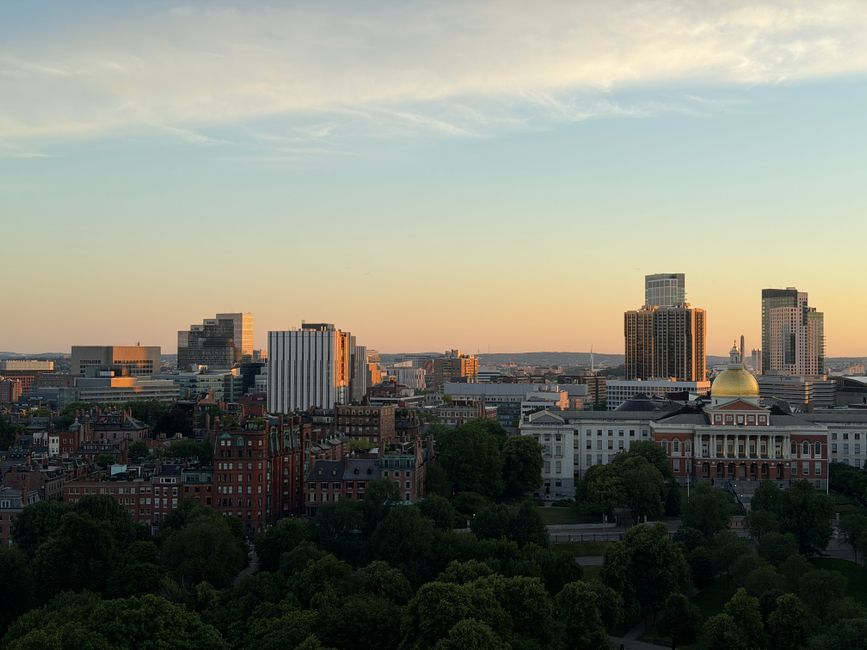
Walk into the Mayhew Institute on Charles Street, and you'll find yourself in the middle of Boston's identity crisis—the productive kind. Curators are busy excavating stories that decades of urban renewal nearly erased: the thriving Black cultural corridor that once stretched through the South End, the immigrant networks that built neighborhoods brick by brick, the working-class movements that shaped American labor history.
This archaeological impulse isn't nostalgic. It's generative. Over the past 18 months, Boston's cultural institutions have increasingly recognized that the city's creative future depends on wrestling honestly with its past—and that acknowledgment is visibly reshaping what gets made, exhibited, and celebrated here.
The numbers tell part of the story. The Boston Public Library's recent community history initiative has catalogued over 3,000 photographs from residents spanning the 1970s through 2000s. Meanwhile, organizations like the Dorchester Historical Society are partnering with local artists to transform archival materials into new work: installations, performances, and digital projects that blur the line between historical documentation and contemporary creation.
This isn't confined to traditional heritage spaces. Across Fort Point Channel, artist collectives have begun occupying decommissioned industrial buildings—the very structures that once powered Boston's manufacturing economy—and turning them into incubators for experimental work. A $2.3 million city investment in neighborhood cultural districts, announced last year, explicitly prioritized areas like Mattapan and Jamaica Plain, historically underfunded pockets of extraordinary cultural vitality.
What's striking is how this reframing changes what Boston artists actually make. Younger creators aren't inheriting a narrative of Boston as a Brahmin cultural capital defined by Harvard and symphony halls. Instead, they're claiming a messier, more contested, fundamentally more interesting inheritance: a city where African American jazz shaped American music, where Puerto Rican and Dominican artists built communities against deliberate erasure, where working-class neighborhoods sustained their own sophisticated cultural ecosystems.
This shift has practical consequences. Gallery and performance venues in neighborhoods like Roxbury and Eastie report increasing foot traffic and broader demographic representation among both artists and audiences. The newly renovated Strand Theatre on Washington Street in Dorchester, which now hosts everything from film festivals to community gatherings, has become a physical anchor for this emerging identity.
Boston's cultural leadership increasingly understands that authenticity—real connection to place and community—is what distinguishes it in an era when every city competes for creative talent and tourism dollars. The city's heritage isn't a museum piece to be preserved. It's live material, constantly being reworked by artists, historians, and residents into something newly vital.
This article was compiled by AI and screened before publishing. See our editorial standards.
How does this story make you feel?
Spread the word
About this article
Published by The Daily Boston
Daily brief
Free, in your inbox before 7am. Weekdays.
More in culture