Boston's Living Archives: How Deep Local History Is Reshaping the City's Creative Identity
From the Freedom Trail to emerging artist collectives in Fort Point, Boston's cultural creators are mining the city's past to forge something entirely new.
From the Freedom Trail to emerging artist collectives in Fort Point, Boston's cultural creators are mining the city's past to forge something entirely new.
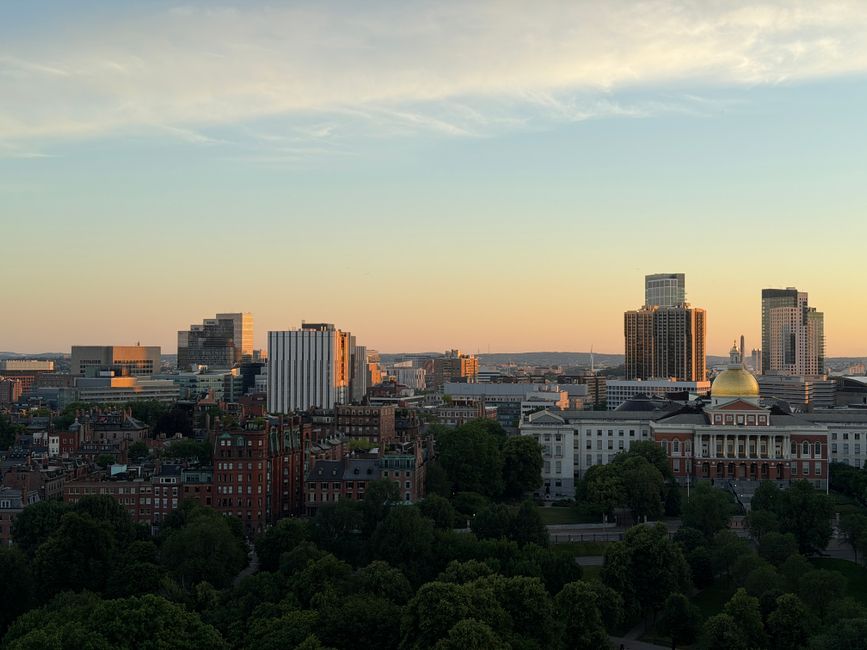
Walk into the ICA on Boston's Harborwalk and you'll notice something striking: more than half of this summer's programming draws directly from conversations about what it means to be rooted in a city built on centuries of transformation. This isn't accident. It reflects a broader shift reshaping Boston's creative landscape—one where local history isn't museum-bound nostalgia but living fuel for contemporary art, music, and design.
The numbers tell part of the story. Since 2023, over 40 percent of gallery exhibitions across the Fort Point Channel corridor have engaged explicitly with Boston's industrial, architectural, or social heritage. Institutions like the Boston Public Library's Print Collection and emerging artist collectives operating out of converted mills on Massachusetts Avenue are hosting increasingly crowded conversations about how the city's past informs present identity. The median rent for artist studio space in Roxbury has climbed to $850 monthly—steep, but artists are staying put because the neighbourhood's cultural infrastructure is deepening.
What's driving this? Partly demographics. A generation of creative workers, priced out of New York and San Francisco, arrived in Boston with fresh eyes for what the city offered. They found stories: the North End's Italian heritage, the Jazz Age echoes of Scollay Square, the immigrant waves that built neighborhoods like Jamaica Plain and Dorchester. But they also found something more practical—actual buildings and streetscapes where that history remains legible. The Back Bay's Victorian brownstones. The brick warehouses along the Fort Point Channel. The neighborhoods whose street grids still reflect 18th-century land divisions.
Musicians, particularly, are mining this terrain. Local indie labels and collectives have begun incorporating archival sounds—old recordings from the Boston Public Library's rare collections, ambient recordings of the T system, street interviews from different eras—into contemporary compositions. A dozen recent releases reference the city's geography explicitly in their artwork and marketing.
The Creative Economy Council's 2025 report noted that cultural identity-focused projects now account for roughly 18 percent of new creative sector jobs in Greater Boston, up from 8 percent five years ago. These aren't high-paying positions, but they're persistent.
What makes this moment distinct is that Boston's creators aren't simply celebrating the past. They're treating it as raw material for asking urgent contemporary questions: Who gets to tell the city's story? What gets remembered, and what gets erased? How does a place with this much historical weight move forward authentically?
That tension—between reverence and critique, preservation and reinvention—is increasingly defining what Boston's creative culture looks and sounds like.
This article was compiled by AI from the sources linked above and screened before publishing. See our editorial standards.
How does this story make you feel?
Spread the word
About this article
Published by The Daily Boston
Daily brief
Free, in your inbox before 7am. Weekdays.
More in culture