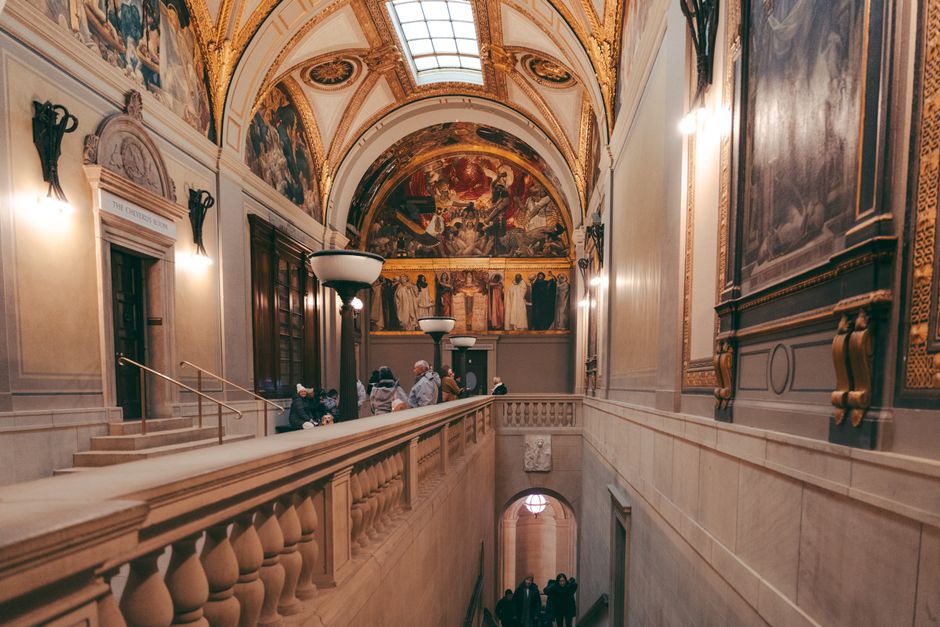
Walk through the Fort Point Channel on a Friday evening and you'll encounter gallery-goers flowing between converted warehouses like salmon returning upstream. Yet two decades ago, these brick buildings housed storage units and light manufacturing. The transformation wasn't inevitable—it was deliberate, driven by a generation of curators, artists, and nonprofit leaders who bet their reputations and savings on neighborhoods most institutions had written off.
The story of Boston's contemporary art scene is fundamentally a story about people who said yes when conventional wisdom said no. When the Greenway Lofts project launched in the early 2010s, attracting galleries to vacant industrial space seemed quixotic. Yet spaces like Fountain Street Gallery and co-working artist collectives began clustering there, creating the gravitational pull that now draws 15,000 visitors monthly to Fort Point's galleries and artist studios.
In Roslindale—a neighborhood many citywide arts organizations ignored—grassroots curators established Distillery Gallery in 2014, a scrappy nonprofit that operates on roughly $80,000 annually. That bootstrapped operation helped catalyze a local creative ecosystem that now includes a half-dozen artist studios and a thriving community arts festival, proving that arts infrastructure doesn't require million-dollar endowments.
The Museum of Fine Arts and Isabella Stewart Gardner Museum command justified international prestige, yet their rise to prominence obscures an equally important story: the mid-sized organizations and solo operators who created accessibility and experimentation. Spaces operating with five-figure budgets often take bigger curatorial risks than their wealthier counterparts. A 2024 survey by the Boston Arts and Culture Foundation found that 34 percent of gallery visitors first discovered contemporary art through neighborhood venues rather than major institutions.
Behind every successful gallery district lies unglamorous infrastructure: landlords willing to negotiate below-market rates, arts administrators working second jobs to fund operations, and curators who developed relationships with artists before there was money in it. The people who built Boston's scene didn't do it for recognition—many remain unknown outside their immediate communities. They did it because they believed neighborhoods needed beauty, and that artists deserved spaces to work.
As real estate pressures intensify across Boston, threatening the economic viability of smaller galleries, the question facing the next generation is whether they'll maintain the inclusive, experimental ethos their predecessors established—or watch it calcify into another version of institutional gatekeeping.
This article was compiled by AI and screened before publishing. See our editorial standards.