Boston's Fashion Scene Is Going Local—And It's Working
After years of chasing New York and LA trends, young designers in the city are building their own ecosystem, and buyers are finally paying attention.
After years of chasing New York and LA trends, young designers in the city are building their own ecosystem, and buyers are finally paying attention.
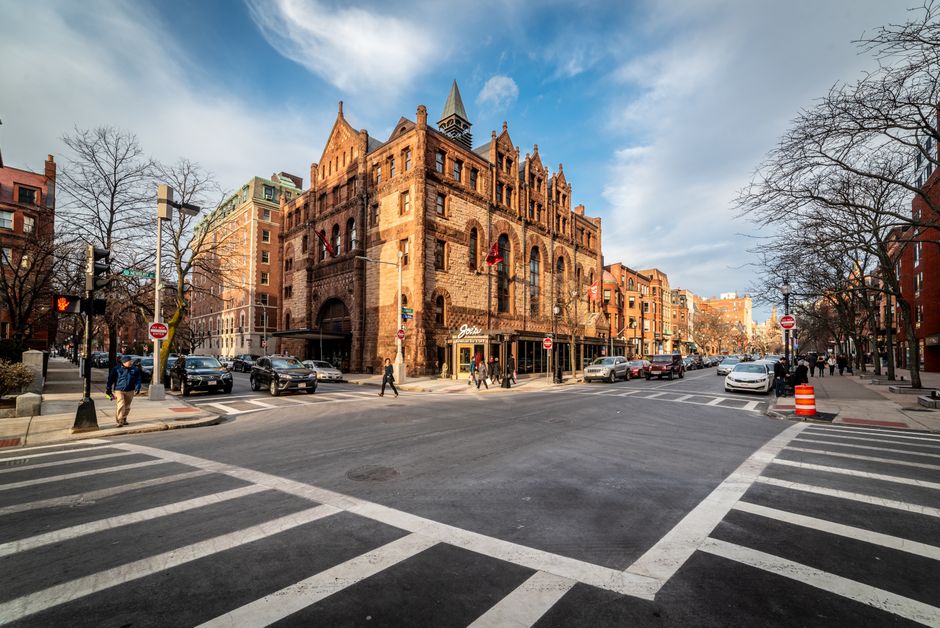
Walk into Crush Collective on Hanover Street in the North End these days, and you'll see something that would have seemed unlikely five years ago: a curated rack of evening wear entirely designed and manufactured within 50 miles of Boston. The boutique, which has operated since 2018, recently dedicated nearly 40 percent of its floor space to local designers—a shift that owner Alexandra Martinez says reflects genuine demand rather than nostalgia.
"People want to know the story," Martinez explained during a recent visit. "They want sustainability, provenance, something that isn't mass-produced in six months." Crush Collective's move mirrors a broader momentum rippling through Boston's creative industries that has become impossible to ignore.
The numbers back it up. According to a June report from the Boston Creative Economy Coalition, fashion-adjacent businesses—design studios, textile workshops, production facilities—grew 23 percent between 2023 and 2025, the strongest sector growth outside tech. The Fort Point Channel area, already home to artist studios and galleries, has absorbed at least a dozen new design firms. Rents in the neighborhood have climbed accordingly, averaging $28 per square foot, but younger designers are finding cheaper footprints in Dorchester and Roxbury, where several cooperatives have launched in the past eighteen months.
Part of this awakening stems from practical necessity. Post-pandemic supply-chain disruptions made overseas sourcing unpredictable for smaller labels. But there's also a cultural shift. The success of Cape Verde's World Cup campaign—which the UK media noted delighted diaspora communities everywhere—has somehow registered with Boston's increasingly diverse creative class as a reminder that authenticity and hyperlocal identity now carry real cachet globally.
The city's fashion calendar reflects this too. MassDesign Week, which pivoted from a trade-focused event to a public-facing festival in 2024, draws over 8,000 attendees annually. This year's iteration, held across South End galleries and pop-up venues, featured forty-two local designers—nearly double the 2024 figure.
Fashion schools matter too. Northeastern and the Massachusetts College of Art and Design are increasingly connecting their students with local manufacturers and retailers rather than funneling talent toward New York internships. That pipeline shift, subtle as it seems, has real implications for where young talent chooses to stay.
What makes this moment distinctive isn't that Boston suddenly competes with fashion capitals. Rather, it's that a critical mass of designers, makers, and buyers have decided they don't need to leave to build something meaningful. That confidence—still fragile, still emerging—is what everyone in the creative community is discussing over coffee on Newbury Street these days.
This article was compiled by AI and screened before publishing. See our editorial standards.
How does this story make you feel?
Spread the word
About this article
Published by The Daily Boston
Daily brief
Free, in your inbox before 7am. Weekdays.
More in culture