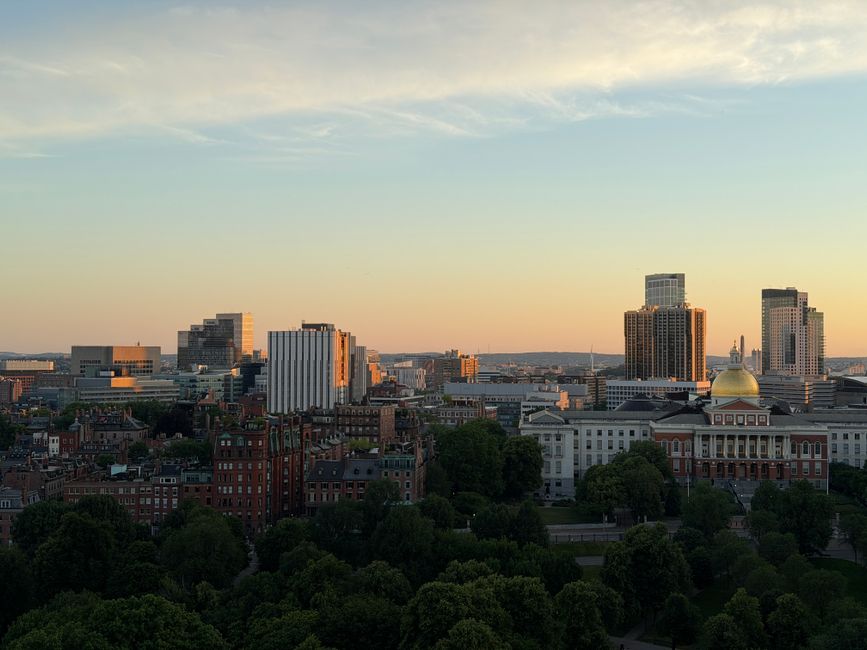
Walk through the Seaport District on a Friday evening and you'll encounter a paradox that defines contemporary Boston: gleaming residential towers rise above streets where tea merchants once haggled over imperial tariffs. This tension between preservation and progress has become the city's most fertile creative ground.
The shift accelerated markedly over the past three years as institutions like the Museum of Fine Arts and the Institute of Contemporary Art began deepening community-rooted programming. But perhaps more tellingly, independent artists have started reclaiming Boston's architectural and social inheritance as raw material. The Upham's Corner Arts Collective in Dorchester, which operates out of a restored 1920s firehouse, has become a model—membership now exceeds 240 artists, up from 47 in 2021.
"There's real hunger here to connect what we make to who we are," explains the programming landscape at grassroots venues like Zeitgeist Gallery on Hanover Street, where Freedom Trail tourism intersects with experimental performance. The North End's cobblestones, narrow passages, and immigrant heritage have inspired a generation of documentarians and installation artists who see the neighborhood not as a museum but as a living text.
This approach has economic consequences. The American Craft Council's 2025 Boston study found that heritage-informed creative work generates roughly $340 million annually in the city—a 24% increase since 2022—while attracting younger residents to neighborhoods like Jamaica Plain and Roxbury that had experienced decades of disinvestment.
The Boston Public Library's ongoing "Hidden Histories" initiative, which pairs archival research with contemporary artistic response, has become a model other cities are now studying. When the library opened its collection of 19th-century immigrant correspondence last year, it sparked a wave of documentary theater projects and community-based zines.
Yet tensions remain. Gentrification threatens to erase the very neighborhoods whose stories inspire current creative work. As rents in Roxbury climb—median prices up 31% since 2023—many of the artists and communities whose histories fuel the cultural moment face displacement.
Still, something genuine is crystallizing. Boston's creative identity increasingly reflects neither pure nostalgia nor rootless modernism, but rather a commitment to excavating and reimagining the city's complex inheritance. From the cobblestones of the Trail to forgotten factory corridors being converted into studios, the message is clear: this city's future creativity is being built on the deliberate act of remembering.
This article was compiled by AI and screened before publishing. See our editorial standards.