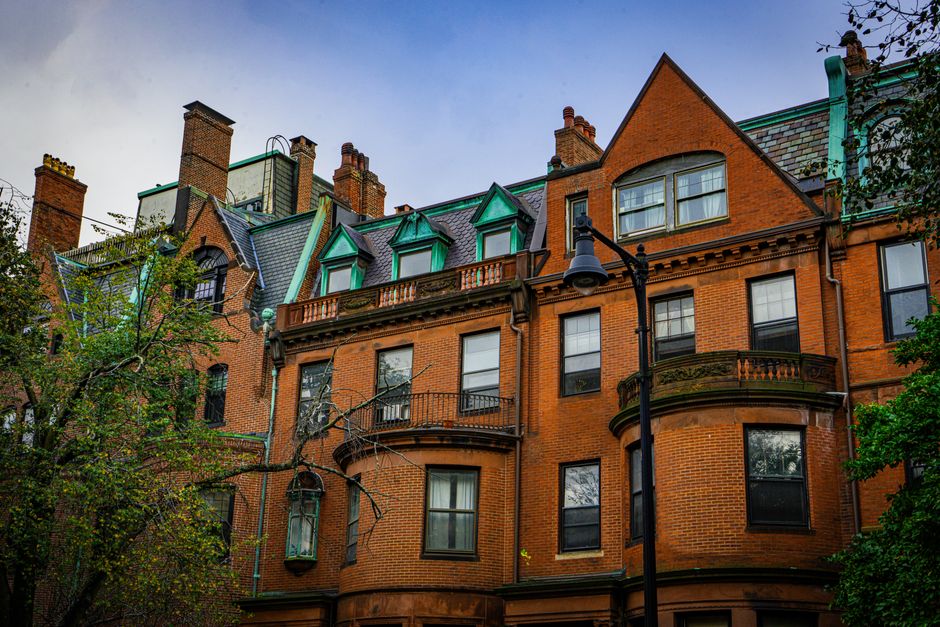
For years, Boston's inclusionary housing policy existed more as aspiration than enforcement. Developers building market-rate projects in hot zones like Seaport and Fort Point could often negotiate their way around affordability requirements with cash payments into municipal funds. That calculation shifted dramatically last month when the city council passed tightened zoning amendments requiring 13% of new units in downtown corridors to be deed-restricted as affordable for 30 years—with no buyout option.
The impact is already visible. A mixed-use project proposed for Hanover Street in the Financial District, initially slated at 245 units with optional affordability, quietly recalibrated to include 32 permanently affordable apartments. Three other developments in Cambridge Street and near the Haymarket station entered renegotiation within weeks of the vote.
Real estate brokers report measurable market friction. While Boston's median price hovers near $780,000—a figure largely driven by Beacon Hill's stratospheric valuations and Back Bay's inventory constraints—developers are recalibrating pro formas. Projects that pencilled out on 85% market-rate, 15% optional affordable now face mandatory deeper inclusion. Some smaller developers have shelved plans entirely.
The question consuming the industry: will stricter policy actually unlock affordability, or simply slow housing supply in a market already constrained by limited developable land?
Somerville and Cambridge are watching closely. Both municipalities face similar pressure, with Cambridge recently adopting a 25% inclusionary requirement for projects above 50 units—among the nation's most aggressive. Local housing advocates cite the policy as essential; at current rates, a two-bedroom in Cambridge rents for $2,400 monthly, pricing out teachers, service workers, and mid-career professionals who keep the region functional.
The South Boston transformation offers a test case. Waterfront development there has generated over 1,200 new homes since 2015, yet median rents in the neighbourhood have climbed 34%. Only 180 units were deed-restricted affordable, suggesting market-rate growth alone doesn't solve the affordability equation.
University-driven demand from Harvard, MIT, and Boston University continues compressing available stock. The new zoning amendments represent the most significant policy lever the city has deployed, forcing developers to choose between inclusion or abandonment.
Whether the market absorbs this shift gracefully, or whether we see a construction slowdown that paradoxically worsens affordability, remains the season's essential question.
This article was compiled by AI and screened before publishing. See our editorial standards.