Boston's luxury property market is operating in a parallel universe. While the broader regional market contends with rate uncertainty and tightening buyer pools, the city's most prestigious addresses continue their upward march, driven by forces that have little to do with traditional economic cycles.
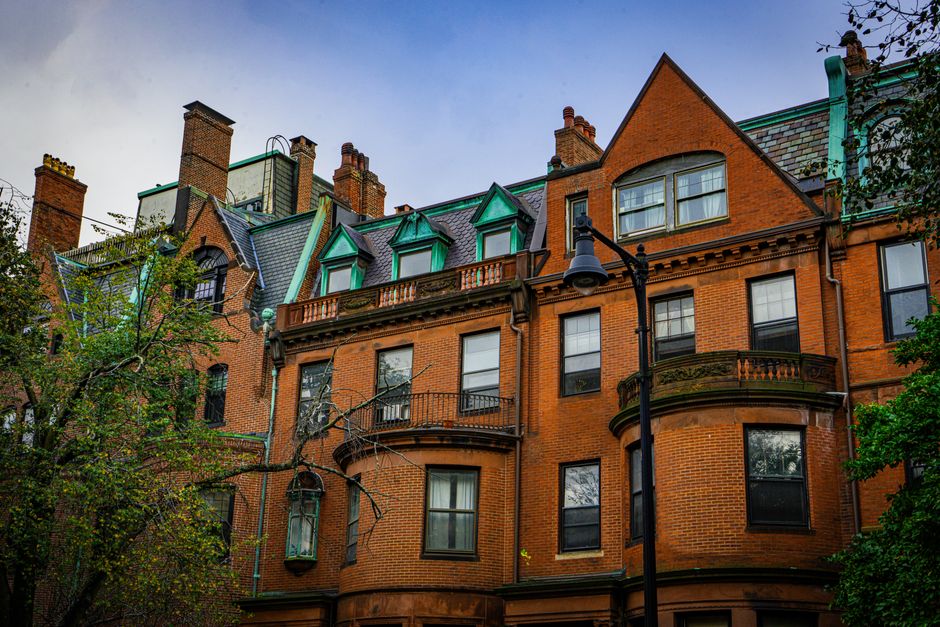
Properties along Mount Vernon Street in Beacon Hill and Commonwealth Avenue in Back Bay remain the bellwethers of this rarefied segment. Recent transactions in these neighbourhoods have consistently commanded premiums of 40 to 60 per cent above the city median of $780,000, with flagship brownstones regularly exceeding $4 million. The disconnect is deliberate—and it reveals what ultra-high-net-worth buyers are actually seeking in 2026.
Three forces are reshaping the luxury landscape. First, Boston's institutional anchors—Harvard, MIT, and Boston College—continue to magnetise global wealth. International families are viewing Beacon Hill properties not as homes but as educational infrastructure investments, securing proximity to top-tier universities for decades. Second, the city's biotech and life sciences boom is creating a new class of founder-wealth holders with unprecedented liquidity. When Moderna executives and venture-backed innovators cash out, they're not looking for mid-market options; they're bidding aggressively for trophy properties with century-old provenance.
Third, supply constraints at the ultra-luxury level are tightening dramatically. Historic preservation requirements that make Beacon Hill and Back Bay so desirable also limit new construction. Unlike Sydney or Melbourne, where new prestige developments can shift market dynamics, Boston's best addresses simply aren't being built anymore—they're being inherited, held, or aggressively pursued.
What should luxury buyers know right now? First: patience is evaporating. Properties in prime pockets—Louisburg Square, Pinckney Street, the Charles River overlooks—are selling faster than any time in five years. Days on market have compressed from 90 days to under 60 for well-positioned properties above $3 million. Second: geography matters more than ever. Even within Beacon Hill, a brownstone two blocks from Charles Street commands dramatically different pricing than one closer to the Esplanade. Third, the entry point has shifted. The $2 to $3 million range—once the traditional gateway to Boston luxury—now requires significant compromise on location or condition.
For buyers entering this market, the lesson is clear: the luxury segment is no longer following Boston's broader property cycle. It's being driven by global wealth flows, institutional proximity, and scarcity of irreplaceable assets. Emotion and long-term wealth preservation are winning over mathematics. In Beacon Hill and Back Bay, that calculation remains unchanged.
This article was compiled by AI and screened before publishing. See our editorial standards.