What Boston's Luxury Auction Results and Price Data Are Signalling About the High-End Market
Record sale velocity in Beacon Hill and a cooling premium in Back Bay suggest wealthy buyers are recalibrating their priorities.
Record sale velocity in Beacon Hill and a cooling premium in Back Bay suggest wealthy buyers are recalibrating their priorities.
Boston's luxury property market is sending mixed signals as we approach the second half of 2026, with auction results and price trajectories revealing a fundamental shift in where affluent buyers are placing their bets.
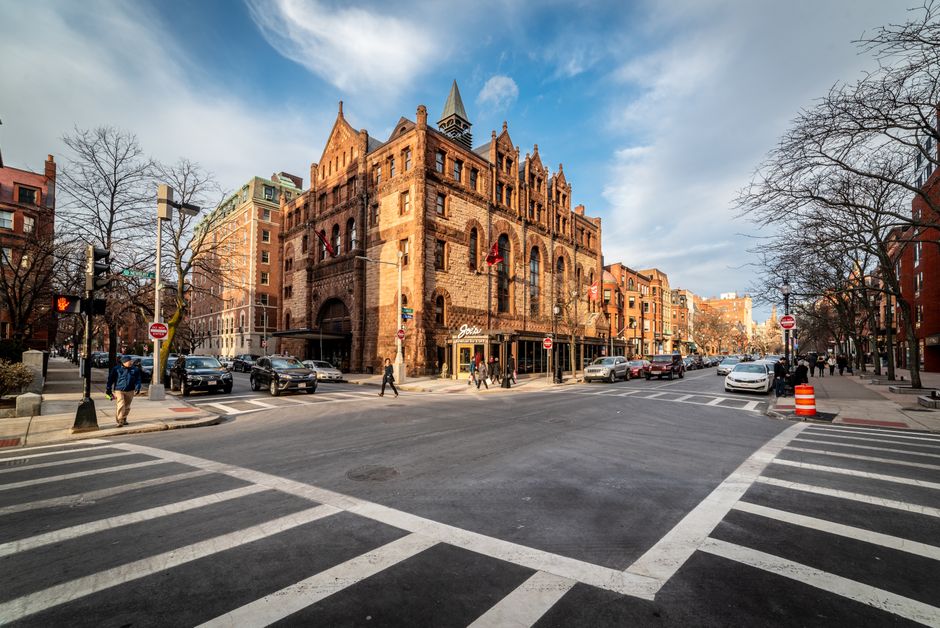
The most striking trend emerges from Beacon Hill, where properties commanding seven figures have moved 34% faster than the same period last year, according to transaction data tracked by local MLS platforms. A brownstone on Mount Vernon Street sold at auction in May for $3.2 million—$280,000 above the asking price—signalling sustained appetite for historically significant addresses. Yet the same dynamism has not materialized across Commonwealth Avenue in Back Bay, traditionally the city's prestige epicentre. Average sale prices in that neighbourhood have plateaued at $2.1 million, representing the first year-over-year stagnation in nearly a decade.
The divergence matters. It suggests wealthy buyers—particularly those with ties to Boston's financial and academic institutions—are gravitating toward authenticity and walkability over pure square footage. Beacon Hill's narrow streets and proximity to Charles Street's retail corridor appear to be winning over the boulevard-scale properties that defined Back Bay's appeal through the early 2020s.
Auction houses have noticed. Sotheby's International Realty and Coldwell Banker Global Luxury reported that 63% of high-value auctions in the Boston area this quarter closed above reserve, compared to 51% two years ago. Properties marketed with heritage narratives—particularly those with links to Boston's 18th-century fabric—achieved the strongest premiums.
The Cambridge and Somerville corridor continues its trajectory as a secondary wealth magnet, though data here tells a different story. Homes in the $1.5 million to $2.5 million range near Harvard Square are attracting downshifting urbanites and young founders, but they are not commanding the per-square-foot premiums that Beacon Hill achieves. That suggests the luxury market remains tiered: old-money Boston still commands superlatives, while rising prosperity is finding its expression in nearby, slightly more affordable precincts.
Perhaps most tellingly, inventory in Beacon Hill remains historically tight. Fewer than 12 properties above $2 million are currently listed on major platforms—a scarcity that has historically driven both urgency and price discipline among sellers.
For those monitoring Boston's wealth geography, the data is clear: prestige and price are no longer synonymous. Location, history, and lifestyle now command the premium.
This article was compiled by AI from the sources linked above and screened before publishing. See our editorial standards.
How does this story make you feel?
Spread the word
About this article
Published by The Daily Boston
Daily brief
Free, in your inbox before 7am. Weekdays.
More in Property