Beacon Hill's Golden Returns: What High-End Property Investors Are Actually Making
As Boston's luxury market stabilises, recent sales data reveals which neighbourhoods are delivering genuine yield—and which are merely riding prestige.
As Boston's luxury market stabilises, recent sales data reveals which neighbourhoods are delivering genuine yield—and which are merely riding prestige.
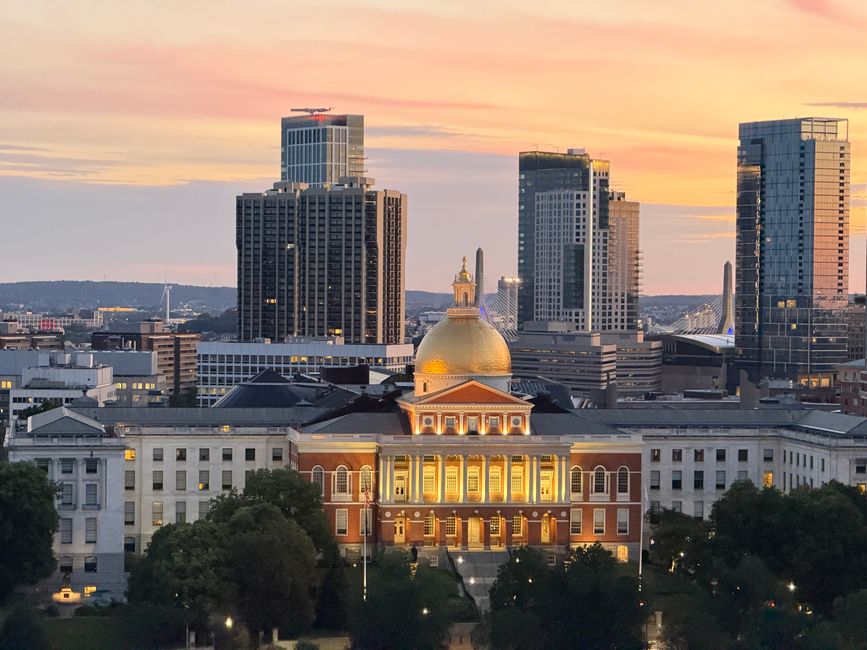
The $3.2 million brownstone on Mount Vernon Street changed hands in March, purchased by an institutional investor group focused on long-term rental returns. The annual gross yield: approximately 2.8 per cent. In a city where Boston's median property price sits at $780,000, such figures tell a crucial story about where serious money is actually flowing—and what the numbers prove about luxury real estate's true performance.
Beacon Hill and Back Bay have long commanded premium positioning in Boston's property hierarchy. Yet investor appetite, traditionally voracious for these historic neighbourhoods, reveals surprising complexity. Recent transaction data shows that while prestige remains undeniable, rental yield trajectories diverge sharply from purchase price appreciation. A four-bedroom townhouse on Louisburg Square—arguably Boston's most exclusive residential address—sold for $4.1 million last autumn. Current comparable rental rates suggest annual yields hovering near 2.1 per cent, substantially below the city-wide median of 3.4 per cent.
The real story, however, extends south. Somerville and Cambridge, traditionally overshadowed by Beacon Hill's cachet, are demonstrating markedly different investor mathematics. Properties around Harvard Square and along the Somerville medians command lower purchase prices yet deliver rental yields closer to 4.2 per cent. University-driven demand remains resilient, anchored by MIT and Harvard's continued expansion and capital allocation.
South Boston's transformation presents yet another calculation. The emerging luxury corridor stretching from Congress Street toward the waterfront shows younger institutional investors increasingly comfortable with higher leverage and longer hold periods. Properties in this neighbourhood appreciate faster than Beacon Hill equivalents—recent comparable sales suggest 6-8 per cent annual appreciation versus 3-4 per cent on the Hill—though immediate rental income remains modest.
What emerges is a fundamental recalibration. Boston's luxury market is bifurcating between those purchasing for prestige and capital appreciation (Beacon Hill, Back Bay) versus those chasing yield efficiency (Cambridge, Somerville, South Boston). The Mount Vernon Street investor, for instance, is betting on 15-year appreciation and positioning within Boston's most stable demographic narrative. The Cambridge investor, conversely, prioritises immediate cash return and tenant stability anchored by university employment.
Interest rate environment and regulatory pressure—particularly zoning reforms affecting multi-unit conversions—continue shaping these calculations. As rates stabilise and Boston's median enters its current equilibrium, sophisticated investors increasingly distinguish between neighbourhoods offering prestige branding and those delivering structural yield advantages. The data, it seems, now rewards clarity of intent over zip code mythology.
This article was compiled by AI from the sources linked above and screened before publishing. See our editorial standards.
How does this story make you feel?
Spread the word
About this article
Published by The Daily Boston
Daily brief
Free, in your inbox before 7am. Weekdays.
More in Property