First-Time Buyers Face Squeeze as Rental Market Pressures Both Tenants and Landlords
Tightening lease conditions are delaying homeownership dreams while forcing property investors to reconsider their portfolios across Greater Boston.
Tightening lease conditions are delaying homeownership dreams while forcing property investors to reconsider their portfolios across Greater Boston.

The path to homeownership in Boston has never been steeper. With the median property price hovering near $780,000, first-time buyers are caught in a vicious cycle: soaring rents in neighborhoods like Somerville and Cambridge are consuming the savings they need for down payments, while landlords themselves are grappling with rising costs that force rent increases that penalise the very tenants most likely to become future owner-occupiers.
Recent data reveals the pressure points. Rental costs across the Boston metropolitan area have climbed consistently, with two-bedroom apartments in Cambridge now commanding premiums that rival purchasing power in adjacent towns. For a tenant earning a modest $65,000 annually, dedicating 30 percent of income to rent leaves minimal headroom for the savings discipline required to accumulate a 5 to 10 percent deposit—typically $39,000 to $78,000 for a median-priced home.
The tension is reshaping neighbourhood dynamics. In Somerville's Union Square and along Massachusetts Avenue in Cambridge, younger renters report deferring ownership indefinitely, while landlords—squeezed by property tax increases and maintenance costs—face difficult choices between raising rents further or divesting from portfolios. This dynamic threatens the pipeline of future homebuyers precisely when first-time purchaser grants and financing programs are expanding.
State and local programs, including the MassHousing Flex Mortgage and down payment assistance schemes, remain underutilised partly because prospective buyers cannot accumulate savings while renting. One Boston-based housing advocacy group notes that their first-time buyer workshops in Roxbury and Jamaica Plain increasingly feature attendees struggling to bridge this gap—rental costs have consumed three to five years of potential savings.
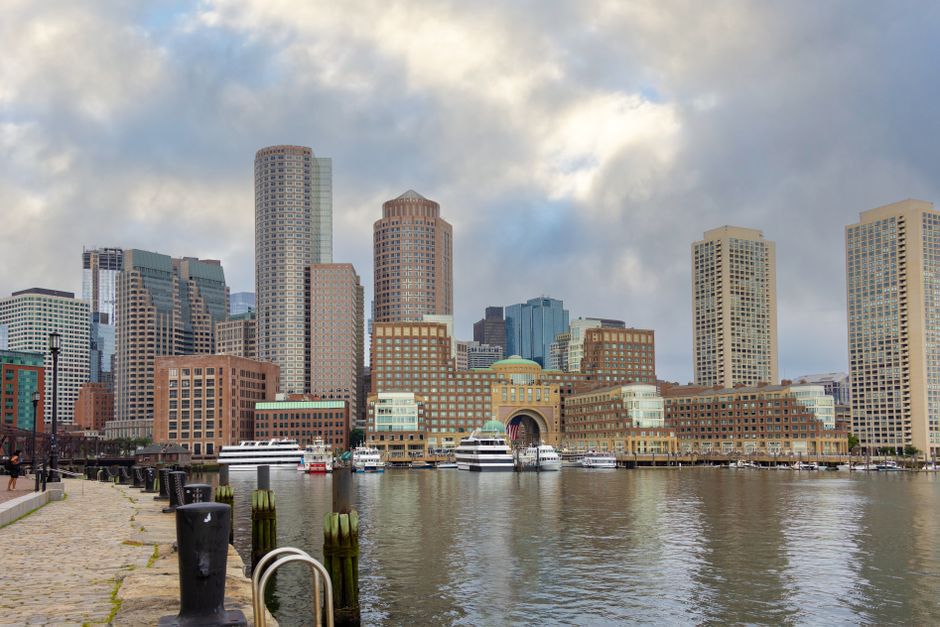
The South Boston transformation illustrates the challenge acutely. As waterfront redevelopment accelerates near the Seaport and Fort Point Channel, rents have climbed while older affordable units disappear. Tenants who might have bought nearby five years ago now find themselves priced out of both ownership and improved rental stock.
For landlords, the equation is equally fraught. Holding older properties in neighborhoods like parts of Dorchester or Allston-Brighton demands rent increases to cover insurance and property taxes, yet such increases accelerate tenant turnover and vacancy risk. Some are quietly exiting, converting to owner-occupancy or selling to institutional investors—further reducing the accessible rental stock that might shelter future buyers.
Until rents stabilise or grant programs expand significantly, Boston's rental market and homeownership pathway remain dangerously misaligned. The city risks creating a permanent renter class precisely where supply constraints and investment incentives should be building next generation homeowners.
This article was compiled by AI from the sources linked above and screened before publishing. See our editorial standards.
How does this story make you feel?
Spread the word
About this article
Published by The Daily Boston
Daily brief
Free, in your inbox before 7am. Weekdays.
More in Property