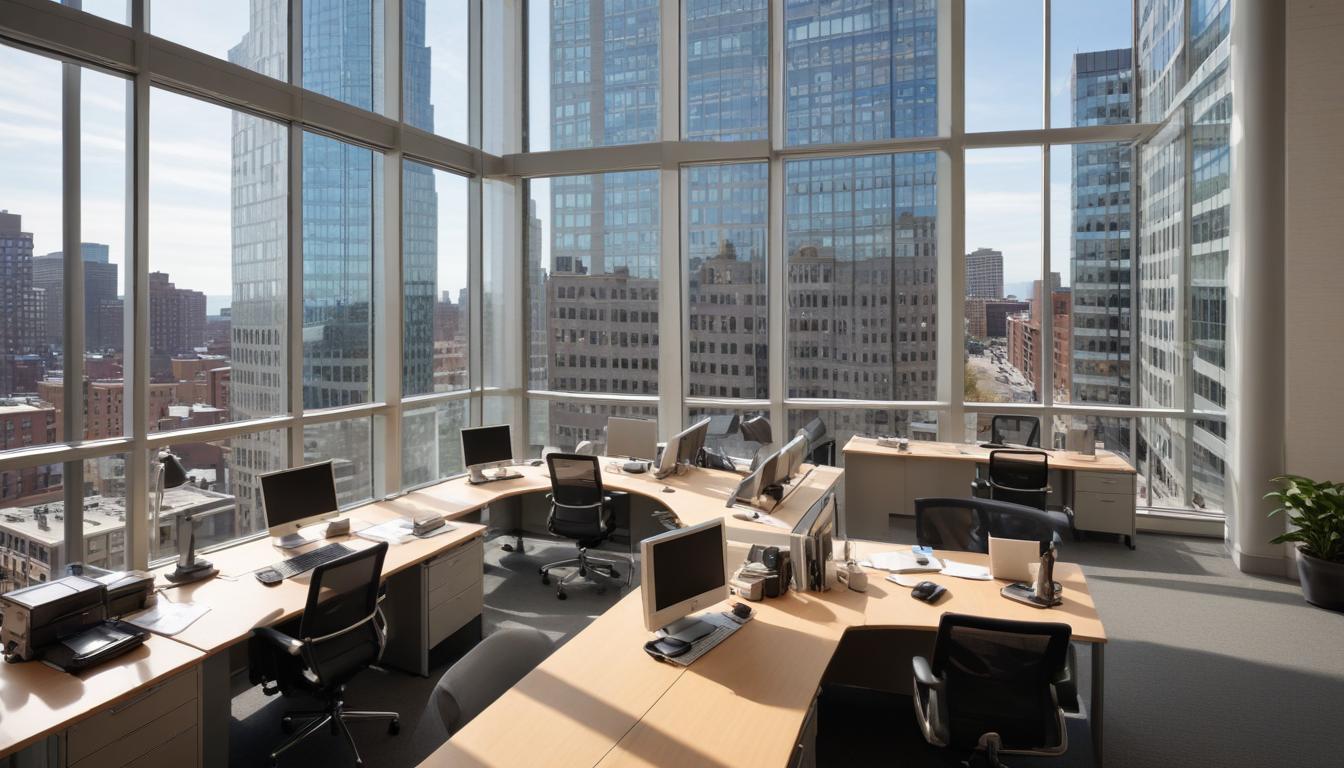
Three years into the remote work era, Boston's job market has undergone a seismic shift. The financial district's gleaming towers along Atlantic Avenue and the tech corridors of the Seaport stand increasingly emptier on Mondays, while hiring managers from Cambridge to Newton are competing fiercely for talent they once assumed would commute downtown.
The numbers tell the story. Commercial office vacancy rates in downtown Boston have climbed to 18.2 percent—nearly double pre-pandemic levels—according to recent commercial real estate data. Meanwhile, suburban employment hubs like the Route 128 corridor and Waltham have seen their job postings spike by 34 percent year-over-year, as companies relocate satellite offices or expand operations closer to where talent actually lives.
"We're seeing a fundamental restructuring," says Richard Morrison, an executive recruiter based on Newbury Street. "Companies that once required daily in-office presence are now competing with startups offering full flexibility. The leverage has shifted entirely to workers."
That shift is rippling through Boston's talent marketplace. Entry-level salaries in software development and finance have risen 12 to 15 percent over two years, driven partly by companies offering remote-friendly packages to retain staff. A junior analyst role that paid $65,000 in 2023 now commands $75,000-plus, even as some employers grapple with reduced commercial footprints.
Life sciences and biotech—Boston's historical strength—have proven more resilient. Companies like those clustered around the Kendall Square innovation district still require lab-based work, creating pockets of tight competition for specialized talent. But even here, hybrid arrangements have become standard.
The shift has reshuffled geographic advantage. Neighborhoods like Somerville and Arlington, once considered distant commutes, are now experiencing residential growth and local commercial development as remote workers seek shorter trips for occasional office days. Waterfront properties near the Harborwalk command premium prices partly because residents value proximity to downtown's amenities rather than necessity of commute.
Employers are adapting strategies. Rather than offering hefty signing bonuses, firms increasingly emphasize flexible working arrangements, professional development budgets, and wellness benefits. Some have downsized downtown footprints while investing in suburban collaboration spaces designed for occasional in-person work.
For job seekers, the picture is decidedly mixed. Greater flexibility and geographic options represent genuine gains. Yet wage growth, while real, hasn't matched cost-of-living increases in the metro area. Boston's median rent has climbed 28 percent since 2020, outpacing salary gains for many roles.
As summer hiring accelerates, one thing is clear: the Boston labor market that emerges from this transition looks structurally different—more distributed, more competitive for quality talent, and less dependent on downtown real estate. Whether that evolution ultimately favors workers or employers remains to be seen.
This article was compiled by AI and screened before publishing. See our editorial standards.