Global Instability Tests Boston's Bottom Line: Why Geopolitical Turmoil Hits Home for Local Business
From supply chain disruptions to currency swings, international crises are reshaping everything from Seaport rents to Main Street inventory costs.
From supply chain disruptions to currency swings, international crises are reshaping everything from Seaport rents to Main Street inventory costs.
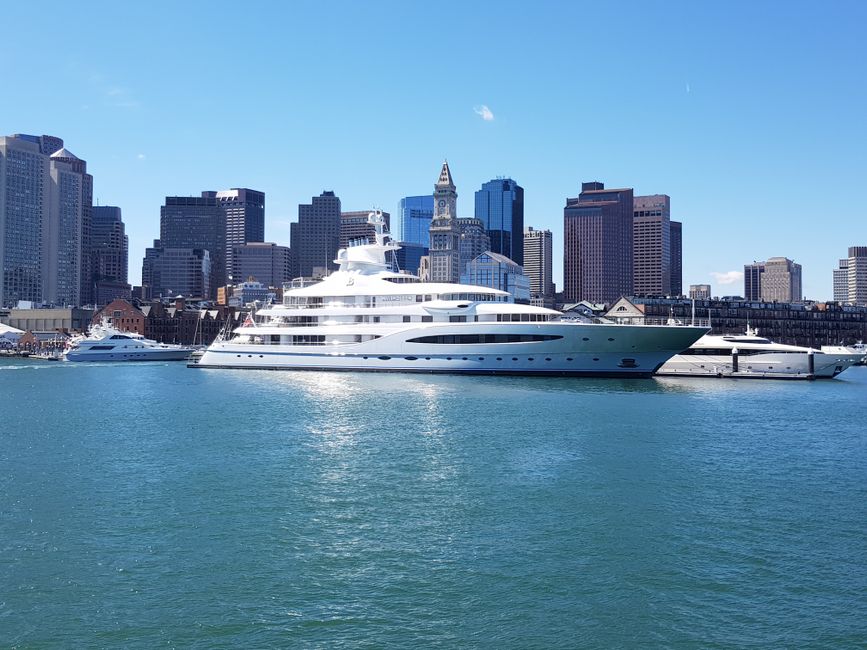
Walk down Atlantic Avenue and you'll see Boston's global heartbeat—container ships, trading firms, pharmaceutical giants. But lately, that pulse has been erratic. The cascade of international instability unfolding across Venezuela, the Middle East, and the Congo isn't just fodder for evening news; it's directly reshaping how Boston's businesses operate, what they pay for goods, and where their capital goes next.
The numbers tell a sobering story. Boston's commercial real estate market, particularly in the Seaport and Financial District, has seen office vacancy rates hover near 15 percent—up from 9 percent in 2022. Much of that softening traces back to companies reassessing supply chain resilience and operational costs. The region's logistics and import-export sector, centered around the Port of Boston, has faced persistent shipping delays and elevated container costs tied to geopolitical friction affecting global trade routes.
"We're seeing clients ask harder questions about sourcing," explains the thinking at major consulting firms along Boylston Street. Companies that once optimized purely for cost are now factoring in geopolitical risk premiums. That shifts where manufacturing happens, and by extension, which ports matter most.
Local impact ripples outward fast. A mid-market distributor in the Everett industrial corridor reported their Asia-to-Boston freight costs have increased roughly 23 percent since early 2024, driven by Suez Canal congestion and Middle East tensions. They've passed some of that downstream. A small retailer on Newbury Street watching margins compress says wholesale costs for imported goods have jumped 12-15 percent year-over-year.
Currency volatility compounds the problem. Boston's financial services firms—the sector that anchors the local economy—navigate dollar strength against emerging market currencies. That reshapes where venture capital flows. Several Boston-based biotech firms have scaled back emerging market expansion plans, redirecting capital domestically instead.
Housing costs haven't escaped the ripple either. Rising construction material prices tied to global supply strain have contributed to Boston's median home price holding near $650,000, pricing out middle-income families across neighborhoods from Jamaica Plain to Cambridge.
What's striking is the speed. A decade ago, geopolitical noise felt distant from Hanover Street trading floors. Today, Iranian sanctions, African health crises, and South Asian conflicts get priced into Boston's operational budgets within weeks. The city's business leaders increasingly recognize they can't isolate themselves from global instability—they can only manage exposure to it.
For Boston's economy, the lesson is uncomfortable: global crisis isn't a distant concern anymore. It's a quarterly agenda item in every boardroom in town.
This article was compiled by AI and screened before publishing. See our editorial standards.
How does this story make you feel?
Spread the word
About this article
Published by The Daily Boston
Daily brief
Free, in your inbox before 7am. Weekdays.
More in Business