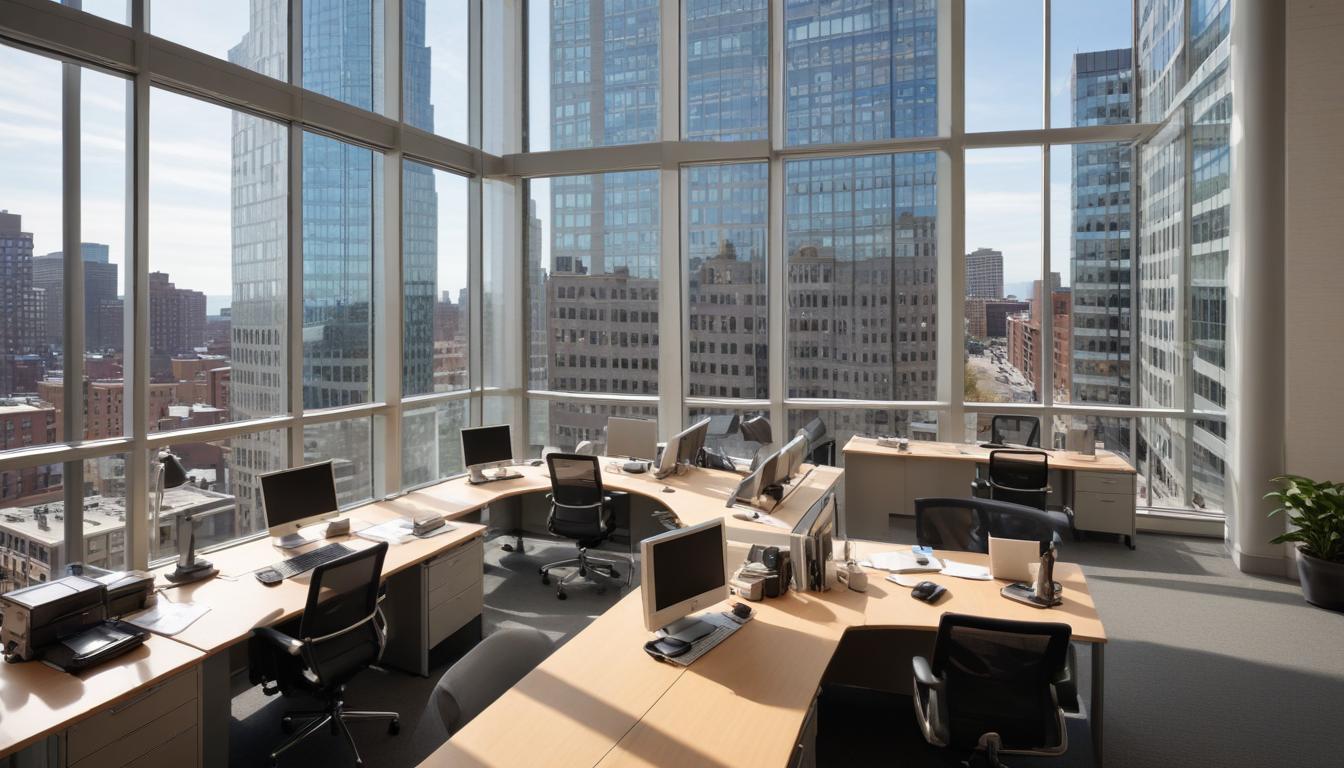
Boston's employment picture has transformed markedly over the past eighteen months, and business leaders across the city are grappling with a labour market that defies easy categorisation. The tech sector, which has been Boston's economic engine since the dot-com era, is no longer the dominant hiring force it once was. And that fundamental shift is reshaping everything from commercial real estate demand in the Seaport District to talent acquisition strategies across the region.
The numbers tell a stark story. Massachusetts's unemployment rate currently sits at 3.8 percent—slightly above the national average—but the composition of available jobs has shifted dramatically. Life sciences and healthcare organisations, concentrated along the I-495 corridor and in Cambridge's Kendall Square, are now absorbing talent that once flowed automatically to technology companies. Partners HealthCare, Boston Children's Hospital, and Moderna have collectively announced over 4,000 net new positions in the past year, even as companies in the innovation district reported modest headcount reductions.
For businesses on Commonwealth Avenue, Newbury Street, and throughout downtown, this means rethinking compensation packages. Entry-level salaries for skilled workers in healthcare administration and biotech roles have risen 12 to 15 percent year-over-year, according to regional recruiting firms. Meanwhile, tech compensation growth has flattened. A senior software engineer in Boston now commands roughly $185,000 to $210,000 in total compensation—a ceiling that feels suspiciously permanent after years of explosive growth.
Commercial landlords and hospitality operators are watching these shifts closely. The Seaport's office vacancy rate edged upward to 11.2 percent last quarter, the highest in a decade, as some tech firms downsized their footprints. Meanwhile, properties in proximity to medical and research campuses—particularly along Avenue Louis Pasteur in Longwood Medical Area—show robust leasing activity.
What should Boston's business community do right now? First, abandon the assumption that skilled workers will accept remote-work arrangements indefinitely. Companies investing in office experiences—particularly those near transit hubs like Back Bay Station—report stronger retention. Second, diversify hiring beyond tech. The city's competitive advantage now spans advanced manufacturing, financial services, and yes, healthcare. Finally, prepare for sustained wage pressure. The Massachusetts minimum wage rises to $15 per hour on January 1, 2027, which will ripple across service sectors already struggling with labour shortages.
The Boston of 2026 is proving more resilient than the single-sector narrative suggested, but only for organisations willing to adapt quickly.
This article was compiled by AI from the sources linked above and screened before publishing. See our editorial standards.