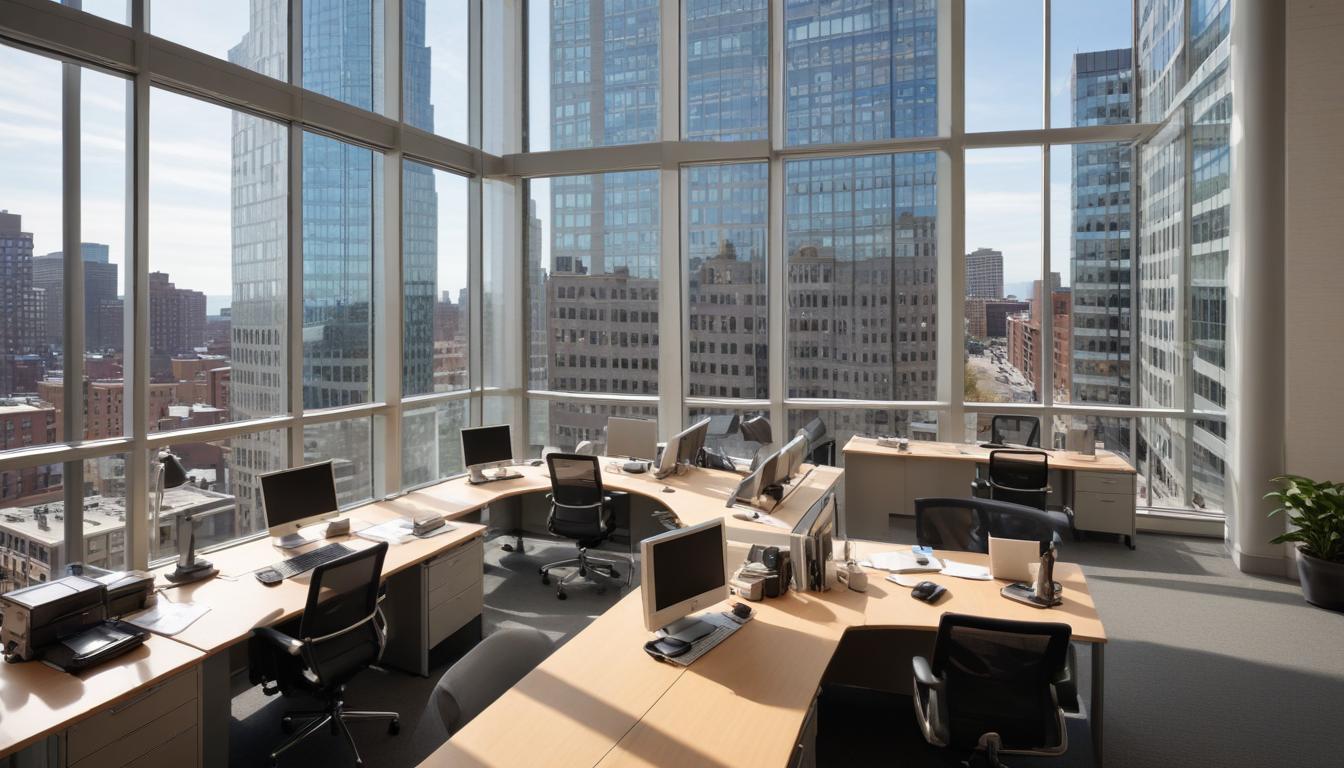
Boston's commercial real estate market is undergoing a seismic shift that extends far beyond vacancy rates and lease negotiations. The contraction in traditional office space—particularly in the Financial District and around the Prudential Center—is fundamentally reshaping how companies recruit, retain, and structure their workforces, creating both acute challenges and unexpected opportunities for the region's talent ecosystem.
The numbers tell a stark story. Downtown Boston's office vacancy rate has climbed to roughly 18 percent, the highest in two decades, while landlords along the Greenway and near Government Center grapple with aging inventory and shrinking tenant rosters. Meanwhile, life sciences and biotech firms continue expanding in Cambridge and Somerville, but even they're experimenting with distributed teams that don't require prime real estate. The result: a fundamental reimagining of what it means to work in Boston.
"The war for talent used to be won with a prestigious address and a corner office," explains the perspective from hiring professionals across the city. Now, companies competing for engineers, analysts, and specialized workers face pressure to offer flexibility that doesn't depend on real estate at all. This shift is pushing smaller firms into satellite offices in Brookline and Jamaica Plain, while larger enterprises consolidate into fewer, premium locations designed around collaboration rather than heads-in-seats.
The implications for Boston's job market are profound. Neighborhoods once considered second-tier—the Innovation District, the Seaport, even outer areas like Kendall Square—are gaining appeal as companies choose locations based on talent density rather than prestige. A software engineer considering a role no longer asks primarily where the office is; they ask whether they need to be there at all.
This reshuffling threatens the downtown core's historical draw while creating unexpected winners. Reverse commuting from inner suburbs is becoming increasingly viable, opening opportunities for workers priced out of central Boston. Yet it also deepens inequality: remote-capable roles command premiums, while positions requiring physical presence—hospitality, healthcare, manufacturing—face persistent wage pressure and staffing challenges.
For Boston's broader economy, the question looms: Can the city maintain its position as a talent magnet when the office itself is no longer the draw? The answer will likely determine whether the city's commercial real estate crisis becomes merely a real estate crisis, or something far more consequential—a restructuring of the regional labor market itself.
This article was compiled by AI from the sources linked above and screened before publishing. See our editorial standards.