How Global Instability Is Reshaping Boston's Investment ...
From supply chain disruptions to currency volatility, international tensions are directly impacting everything from Seaport rents to venture capital flows in the Hub.
From supply chain disruptions to currency volatility, international tensions are directly impacting everything from Seaport rents to venture capital flows in the Hub.
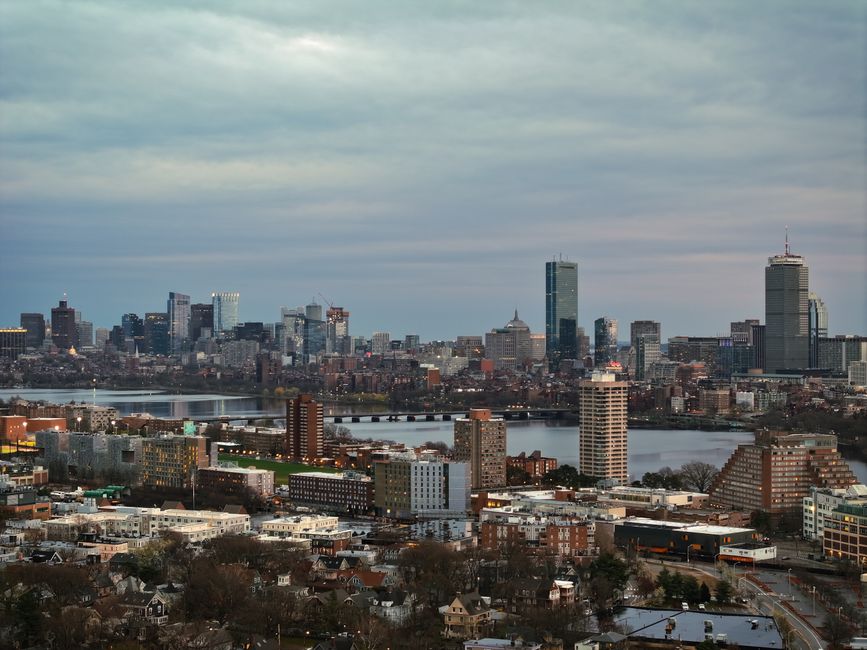
Boston's business community is learning a hard lesson this summer: what happens in the Strait of Hormuz, the Congo, or the halls of international diplomacy doesn't stay overseas. The mounting geopolitical tensions across the Middle East, ongoing humanitarian crises in Africa, and unpredictable policy shifts are creating a cascade of economic pressures that are rippling through local commercial real estate, venture funding, and operational costs for companies headquartered along the Innovation District and beyond.
The impact is most visible in the Seaport District, where commercial landlords are grappling with increased insurance premiums tied to international shipping volatility. Office leases that averaged $65 per square foot in early 2025 have begun climbing toward $72 as property owners factor in geopolitical risk premiums. For a mid-sized biotech firm leasing 50,000 square feet near the Boston Convention and Exhibition Center, that translates to roughly $350,000 in additional annual costs.
Meanwhile, venture capital firms operating out of prestigious addresses along Milk Street and Federal Street report a marked shift in investment patterns. Global instability traditionally sends money toward safer assets, yet Boston's life sciences and software sectors remain attractive—but at stricter valuations. Several institutional investors have quietly reset their risk parameters, making Series B and C funding rounds 15 to 20 percent harder to secure for companies with international supply chains or emerging market exposure.
The consumer-facing pain is equally sharp. Restaurants, retailers, and hospitality operators in Back Bay and Downtown Crossing are absorbing margin-crushing costs. Coffee importers report that currency fluctuations and regional instability have pushed wholesale prices up 8 to 12 percent since January. A specialty roaster on Newbury Street now pays roughly 40 percent more for Ethiopian and Central American beans than eighteen months ago. Those costs are creeping into menu prices: a premium espresso drink that cost $5.50 last year now runs $6.25.
Staffing agencies operating across the Greater Boston area note another ripple: uncertainty about skilled immigration has tightened talent availability in engineering and healthcare sectors. Companies are bidding more aggressively for experienced workers, pushing compensation expectations higher across the region.
Local business leaders emphasize resilience, but the message is clear: Boston's economy, for all its local strengths, operates within a global system increasingly prone to shocks. Diversification and scenario planning are no longer optional for anyone serious about navigating 2026 and beyond.
This article was compiled by AI and screened before publishing. See our editorial standards.
How does this story make you feel?
Spread the word
About this article
Published by The Daily Boston
Daily brief
Free, in your inbox before 7am. Weekdays.
More in Business