Global Instability Is Already Hitting Boston's Bottom Line—Here's How
From shipping delays to talent drain, international crises are reshaping how local manufacturers, biotech firms, and financial services compete.
From shipping delays to talent drain, international crises are reshaping how local manufacturers, biotech firms, and financial services compete.
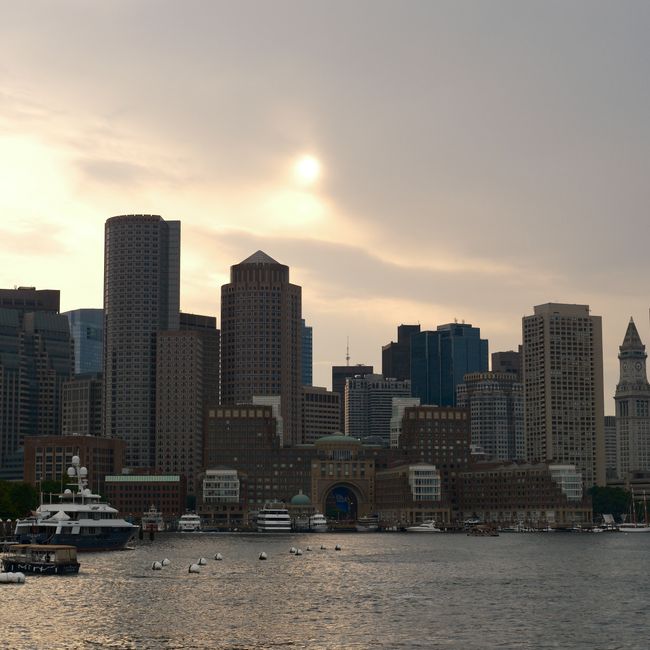
Walk into any supply chain meeting in Boston's Financial District these days, and you'll hear the same refrain: the world is getting riskier, and it's costing us real money.
The cascading geopolitical tensions across the Middle East, the Ebola outbreak spreading through the Democratic Republic of Congo, and escalating regional conflicts in South Asia are creating immediate headwinds for the city's export-dependent businesses. For companies headquartered along Atlantic Avenue or in the Seaport District, what happens in Tehran, Kinshasa, or Islamabad now directly determines quarterly earnings and hiring plans.
The numbers tell a sobering story. Boston's manufacturing sector—concentrated in precision instruments, medical devices, and electronics—relies heavily on stable global shipping routes and predictable supply chains. A single disruption in the Strait of Hormuz can spike shipping costs 15 to 30 percent overnight, according to logistics firms operating out of the Prudential Center. One mid-sized Watertown optical components manufacturer reported a 12-day delay in parts from South Korea last month, forcing them to push back product launches and defer hiring for their Cambridge expansion.
But it's not just logistics. The geopolitical uncertainty is triggering a quiet talent exodus. Boston's biotech sector—the region's crown jewel—increasingly struggles to attract and retain international researchers and executives. Visa processing delays, travel uncertainty, and concerns about political instability abroad are making it harder for firms in Kendall Square to recruit the global talent they need to compete with San Francisco and Singapore. One senior biotech recruiter noted that Canadian and European candidates are increasingly hesitant about long-term U.S. commitments.
Financial services firms headquartered in Boston are also recalibrating risk assessments and regulatory compliance costs. Banks and investment firms on State Street are dedicating more resources to geopolitical analysis and sanctions monitoring as U.S.-Iran tensions escalate and trade relationships remain in flux.
For Boston's business community, the lesson is clear: global instability isn't some distant news story. It's a direct hit to margins, supply chains, and talent retention. Companies that can navigate these headwinds—through diversified suppliers, remote-friendly policies, and sophisticated risk management—will outpace those that can't. The question for local leaders isn't whether the world's instability matters to Boston. It obviously does. It's how quickly they can adapt.
This article was compiled by AI and screened before publishing. See our editorial standards.
How does this story make you feel?
Spread the word
About this article
Published by The Daily Boston
Daily brief
Free, in your inbox before 7am. Weekdays.
More in Business