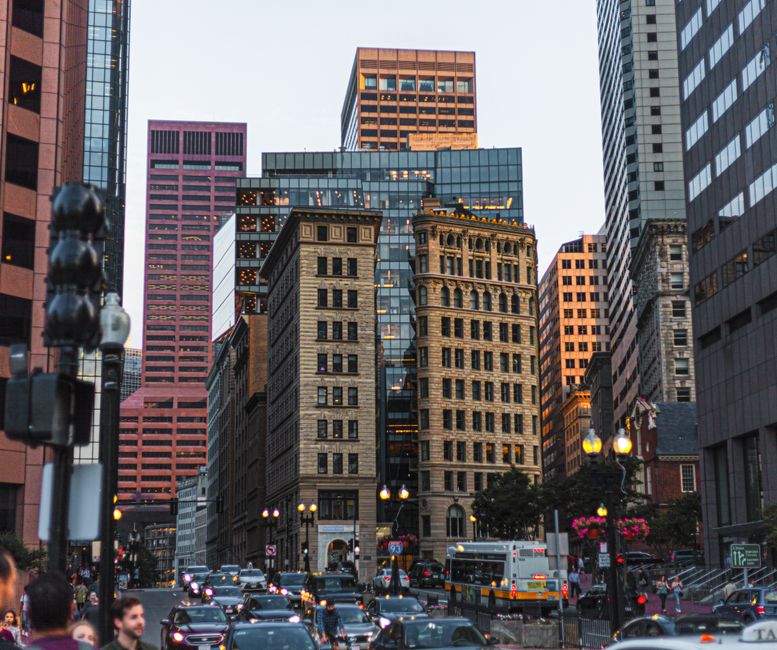
On a Tuesday morning at the offices of Boston's State Street Corporation—whose gleaming towers anchor Atlantic Avenue—traders monitor a metric that few Main Street residents have heard of but everyone should understand: capital flows.
Capital flows, simply put, are the movement of investment money across borders. Right now, those flows are telling Boston's business community something important about global economic health. And the signals are mixed.
"When foreign investors pull money out of emerging markets and park it in U.S. Treasury bonds, we're seeing risk aversion," explains the logic behind recent trends. Over the past six months, foreign direct investment into the United States has surged 23 percent year-over-year, according to Federal Reserve data analyzed by local research firms. Much of it has landed here.
Consider the Seaport District, where real estate values have climbed 12 percent since January 2026. Chinese and Canadian investment groups have committed over $800 million to mixed-use developments along Fan Pier Boulevard. Meanwhile, German and Japanese firms have opened new office space in the Financial District, near the Boston Public Library's Copley Square location.
What does this mean? "It's a vote of confidence in the U.S. dollar and Boston's financial infrastructure," notes local analysis. When the dollar strengthens against the euro and yen—which it has—foreign investors effectively get more purchasing power here. That's why they're buying.
But here's where it gets complicated. These same capital flows mask deeper anxieties. The United Nations Conference on Trade and Development reported this month that global foreign direct investment fell in 2025, then rebounded selectively toward stable economies like the U.S. This suggests investors are nervous about emerging markets and geopolitical uncertainty.
For Boston employers, it's a double-edged sword. Companies headquartered in the region—from biotech firms in Kendall Square to insurance giants in the Back Bay—benefit from stronger capital access and lower borrowing costs. But their overseas operations face headwinds when foreign currencies weaken.
The Boston Federal Reserve recently highlighted another concern: rising debt-to-GDP ratios globally. When countries borrow heavily to manage crises, it eventually pressures currency values and investment returns.
So what should Boston residents watch? Monitor the dollar's strength against emerging market currencies, track which countries are attracting foreign investment, and watch whether interest rates stabilize. These three indicators collectively signal whether global economic growth is sustainable or built on temporary shifts in investor psychology.
The patterns visible on State Street's trading floors ripple outward, affecting everything from your mortgage rate to local job growth.
This article was compiled by AI from the sources linked above and screened before publishing. See our editorial standards.