Boston's Tourism Engine Sputters: What's Really Behind the Summer Slowdown
Higher costs, global uncertainty, and shifting travel patterns are forcing the city's hospitality sector to reckon with its worst year in a decade.
Higher costs, global uncertainty, and shifting travel patterns are forcing the city's hospitality sector to reckon with its worst year in a decade.
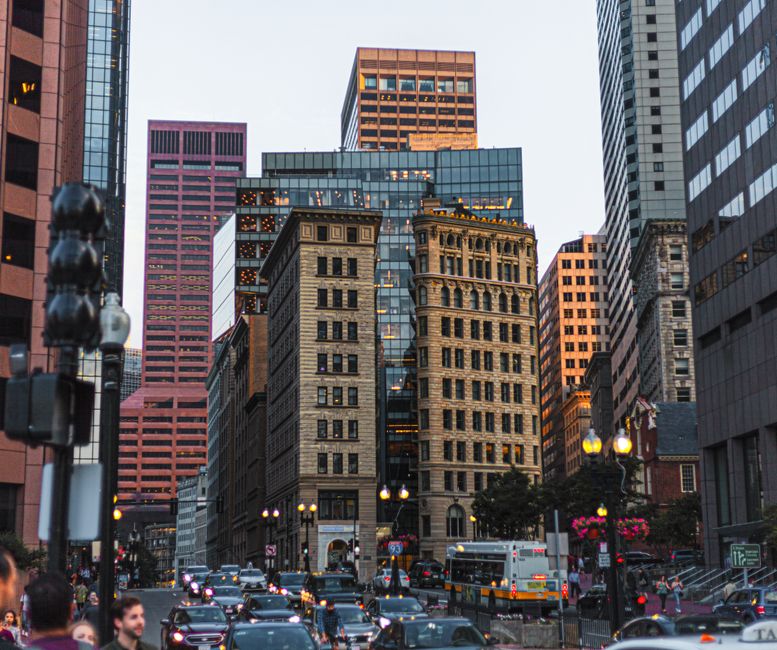
Walk down Newbury Street on a Tuesday afternoon and you'll notice something odd: the outdoor patios are half-full, the boutique hotel lobbies quieter than usual, and restaurant reservation books show worrying gaps. After years of robust growth, Boston's visitor economy is facing its most challenging year since 2016, and industry leaders are scrambling to understand why.
The numbers tell a sobering story. Hotel occupancy across the greater Boston area has fallen to 76 percent through June, down from 82 percent last year, according to preliminary data from the Greater Boston Convention & Visitors Bureau. More concerning: average nightly room rates have plateaued at $189, essentially flat compared to 2025, even as operational costs continue climbing. For a sector that generated $7.4 billion in economic activity just two years ago, the stagnation stings.
Several converging pressures explain the downturn. International visitation—traditionally a cornerstone of Boston's tourism appeal—has contracted sharply. Geopolitical tensions in the Middle East and ongoing volatility affecting European markets have dampened overseas travel. Canadians, historically among Boston's most reliable visitors, face currency headwinds that have made American travel 15 percent more expensive than it was eighteen months ago.
Domestic travelers, meanwhile, are being squeezed by different forces. Airfares to Logan Airport remain elevated despite broader market competition. A family of four flying from Chicago to Boston can expect to pay 22 percent more than comparable travel to Washington, D.C., which has sharpened price sensitivity. Major employers in the tech and biotech sectors—which drive corporate travel and conventions—have pulled back discretionary spending amid broader economic caution.
The ripple effects are being felt across the ecosystem. Historic neighborhoods like the North End and the Seaport are experiencing slower foot traffic. Attractions like the Museum of Fine Arts and the New England Aquarium have reported softening attendance. Even the Boston Red Sox's tourism-adjacent appeal hasn't fully compensated, with Fenway Park attendance down 8 percent year-over-year.
Convention business, a crucial revenue driver, has contracted. The Massachusetts Convention Center Authority reported a 12 percent decline in major convention bookings for the second half of 2026. Hotels along the Waterfront and downtown Boston, which depend heavily on group business, are offering aggressive discounts—some running promotional rates not seen since 2020.
Industry insiders say recovery will hinge on how quickly global travel confidence rebounds and whether Boston can differentiate itself in an increasingly crowded regional tourism market. For now, the city's tourism sector is bracing for what may be the longest soft patch in a generation.
This article was compiled by AI from the sources linked above and screened before publishing. See our editorial standards.
How does this story make you feel?
Spread the word
About this article
Published by The Daily Boston
Daily brief
Free, in your inbox before 7am. Weekdays.
More in Business