Boston's business community is at a critical inflection point. With federal interest rates holding steady at levels unseen in two decades, companies operating everywhere from the Innovation District to the Seaport are grappling with a cost-of-living squeeze that's reshaping investment decisions and hiring patterns.
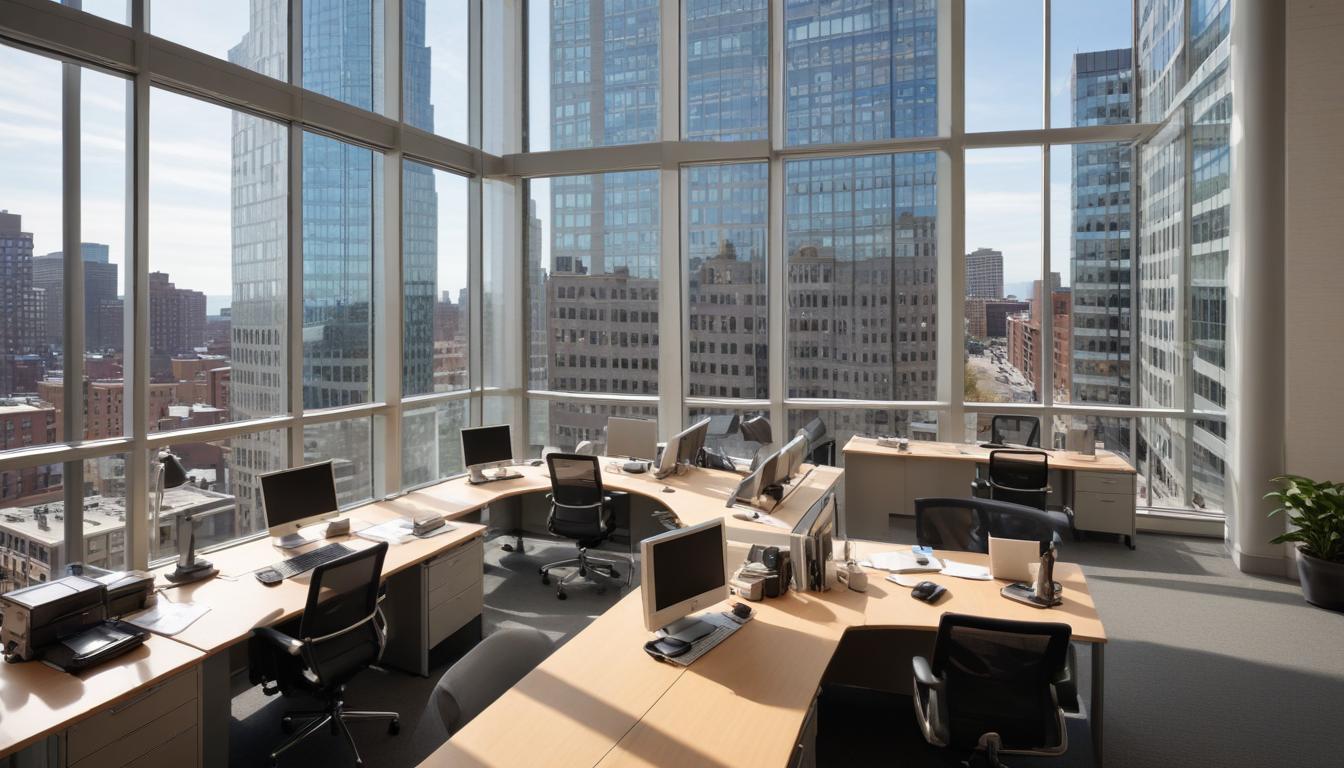
The numbers tell a sobering story. Commercial office space in downtown Boston remains soft, with Class A rents averaging $65 per square foot—down from peaks of $72 just 18 months ago. Yet residential rents in adjacent neighborhoods like the Back Bay and Beacon Hill have continued climbing, now exceeding $3,200 monthly for a one-bedroom apartment. This divergence is creating operational headaches for employers struggling to retain talent.
"We're seeing companies make harder choices about where to invest," said a spokesperson for the Boston Chamber of Commerce, reflecting widespread concern about the investment landscape. "Many are delaying expansion, consolidating office space, and accelerating automation to offset wage pressure."
The Massachusetts economy, long buoyed by its biotech and financial services sectors, is showing mixed signals. While unemployment in the Boston metro area hovers near 3.8 percent—below the national average—wage growth has struggled to keep pace with inflation. Healthcare and life sciences employers around Cambridge and Kendall Square are offering generous bonuses but holding base salary increases steady.
Real estate investment trusts focused on the region report cautious optimism about industrial and logistics properties, particularly around Route 128 and the emerging warehouse districts in Everett and Chelsea. E-commerce and supply chain companies are still leasing space, though at lower rates than the pre-pandemic era.
For small and mid-sized businesses operating on Newbury Street, Hanover Street's North End corridor, and throughout the Fenway corridor, the calculus is even tighter. Rising property taxes, coupled with persistent energy costs, are compressing margins. Many are exploring hybrid work models not out of conviction but pure necessity.
The investment community hasn't abandoned Boston—venture capital funding in the first half of 2026 remains robust by historical standards—but the nature of bets is shifting. Clean energy, healthcare innovation, and software are attracting capital. Traditional retail and hospitality face headwinds despite robust tourism.
For businesses planning through 2027, the message is clear: assume rates stay elevated, expect talent competition to remain fierce, and plan for margin compression. The companies thriving in this environment are those adapting quickly to operating lean while investing strategically in high-ROI initiatives. In Boston's competitive market, that distinction increasingly separates winners from the rest.
This article was compiled by AI and screened before publishing. See our editorial standards.