Global Upheaval Is Reshaping Boston's Supply Chains—and ...
From Venezuelan oil disruptions to Middle East tensions, international instability is forcing local entrepreneurs to rethink everything from inventory costs to shipping routes.
From Venezuelan oil disruptions to Middle East tensions, international instability is forcing local entrepreneurs to rethink everything from inventory costs to shipping routes.
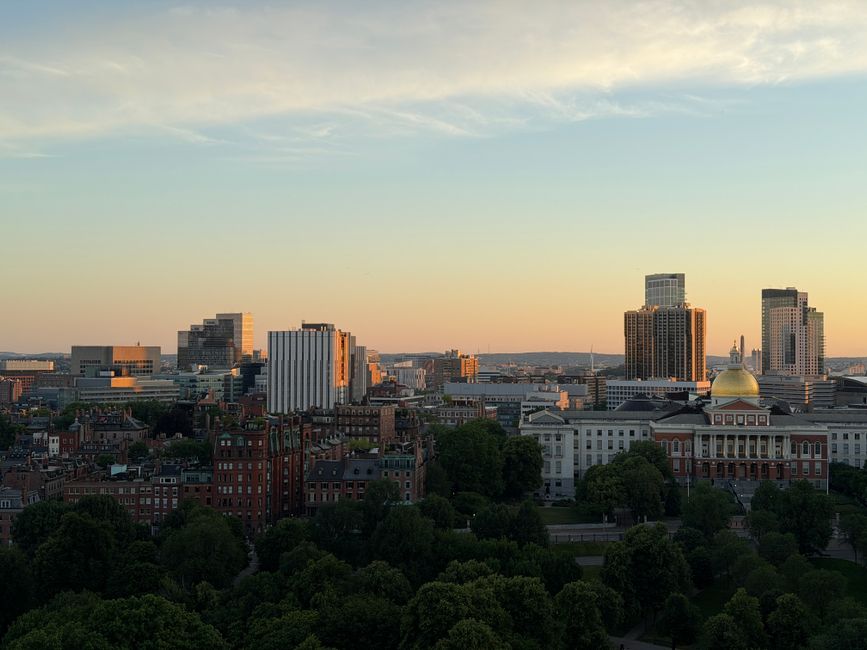
Walking down Hanover Street in the Financial District, you might not immediately connect a coffee roaster's rising bean prices to an Iranian blockade threat 6,000 miles away. But for Boston's small business owners, the distance between geopolitical crisis and bottom-line impact has never been shorter.
The past six months have exposed a hard truth: local entrepreneurs operate in an increasingly fragile global system. Recent instability in Venezuela has disrupted crude oil markets, pushing transportation costs up 12-15 percent for regional manufacturers. Meanwhile, tensions in the Middle East have insurance companies reassessing maritime routes through the Strait of Hormuz—a chokepoint that affects everything shipped through the Suez Canal to Boston's seaport.
"Our freight forwarding costs have jumped dramatically," says the owner of a Seaport District import-export firm, requesting anonymity to avoid alarming customers. "Carriers are adding 'war risk' surcharges. What used to cost $8,000 per container now costs $10,500."
The ripple effects are visible across Boston's neighborhoods. In Cambridge's Kendall Square, biotechnology suppliers report raw material shortages from South Asian manufacturers disrupted by regional conflict. Retailers along Newbury Street are absorbing higher import duties and extended lead times. A North End specialty foods importer estimates that Venezuelan supply chain chaos has added $3,000-$5,000 monthly to operational costs.
For Boston's 45,000 small businesses—which collectively employ roughly 300,000 people—the calculus has shifted fundamentally. Owners who once optimized exclusively for cost now factor in geopolitical risk. Some are reshoring inventory. Others are diversifying suppliers across continents rather than consolidating in single regions.
The Boston Chamber of Commerce has noticed increased demand for supply chain consulting. "Businesses that never had international exposure five years ago now need it," according to statements from the organization's recent advisory reports. Companies are attending workshops at the Federal Reserve Bank of Boston about hedging currency risk and navigating tariff uncertainty.
Yet opportunity exists for those adapting quickly. Local logistics firms report strong demand from clients seeking more resilient distribution networks. Tech companies building supply chain resilience software are expanding Boston operations. And entrepreneurs willing to invest in redundancy—maintaining relationships with multiple suppliers and holding strategic inventory—are positioning themselves as the stable players their customers increasingly crave.
The lesson is clear: in 2026, being a Boston business owner means managing not just local economics, but global volatility. The question is no longer whether international crises affect your bottom line—it's how quickly you can adapt when they do.
This article was compiled by AI from the sources linked above and screened before publishing. See our editorial standards.
How does this story make you feel?
Spread the word
About this article
Published by The Daily Boston
Daily brief
Free, in your inbox before 7am. Weekdays.
More in Business