Boston's startup ecosystem faces perfect storm of ...
Once a beacon for venture-backed innovation, the city's celebrated innovation districts are grappling with their toughest year in over a decade.
Once a beacon for venture-backed innovation, the city's celebrated innovation districts are grappling with their toughest year in over a decade.
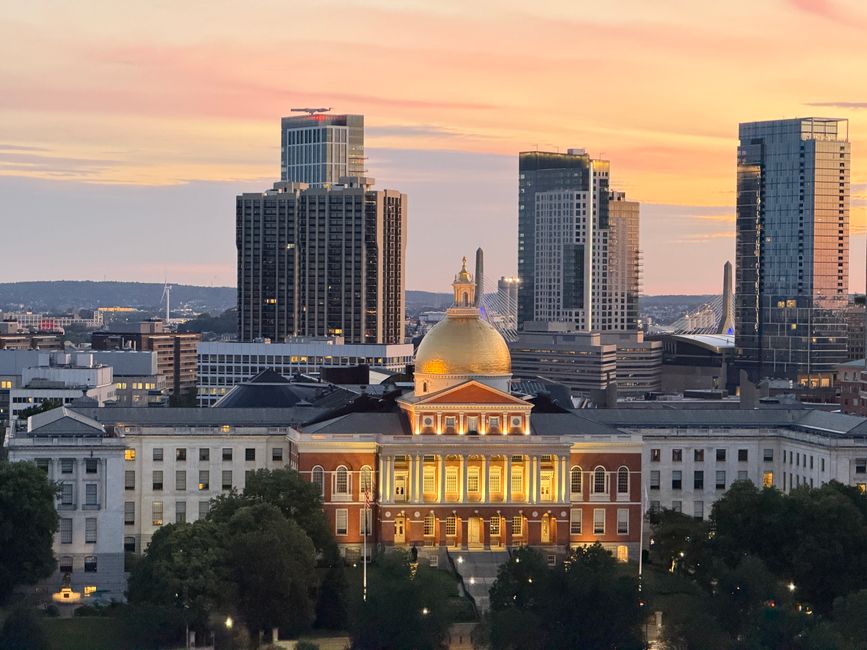
Boston's startup landscape, long celebrated as a counterweight to Silicon Valley dominance, is confronting a confluence of economic pressures that threaten to hollow out the region's innovation engine. After years of explosive growth fueled by institutional capital and talent migration, founders and venture capitalists across Kendall Square, the Seaport, and downtown corridors are bracing for what many describe as a recalibration they didn't anticipate.
The headwinds are immediate and measurable. Venture funding into Massachusetts-based startups totaled $6.2 billion through the first half of 2026—down 34 percent from the same period last year, according to preliminary data tracked by regional investment networks. More concerning than the raw numbers is the demographic shift: young tech talent is departing. LinkedIn migration data shows a net outflow of workers aged 25-35 from the Boston metro area to lower-cost regions, reversing a decade-long trend. Meanwhile, office space in once-hot addresses along the Charles River continues to flood the sublease market.
Real estate pressures compound the challenge. Class A office rents in Kendall Square remain stubbornly elevated at $70-75 per square foot annually—pricing that made sense when venture capital flowed freely but feels prohibitive now. Coworking facilities that once anchored early-stage founders have consolidated, with several Cambridge-based hubs closing or consolidating operations in recent months.
The talent drain reflects broader challenges. Compensation expectations in Boston startups haven't contracted in line with funding realities. A mid-level software engineer in a Series B company still commands $180,000-220,000 in base salary plus equity—figures that companies burning capital at accelerated rates increasingly struggle to sustain. Meanwhile, established tech employers like those in the Cambridge biotech corridor continue absorbing top engineering talent.
Some founders point to geographic arbitrage as an escape hatch. Denver, Austin, and Miami have become proven alternatives for companies seeking lower operational costs without sacrificing talent access. Others are doubling down, arguing that Boston's deep research university network—MIT, Harvard, Northeastern—remains unmatched and will eventually prove decisive.
Business leaders and economic development officials acknowledge the moment requires honest assessment. The Boston Foundation and MassChallenge, key ecosystem supports, are quietly recalibrating programming to focus on sustainability rather than hypergrowth. The question facing the region is whether this represents a healthy correction or the beginning of a more structural decline in competitive advantage.
This article was compiled by AI and screened before publishing. See our editorial standards.
How does this story make you feel?
Spread the word
About this article
Published by The Daily Boston
Daily brief
Free, in your inbox before 7am. Weekdays.
More in Business