The Daily Commute Reveals Boston's Beating Heart: What Your Neighborhood Says About You
From the Green Line's eclectic riders to the ferry passengers watching the harbor, how Bostonians get around tells the real story of who we are.
From the Green Line's eclectic riders to the ferry passengers watching the harbor, how Bostonians get around tells the real story of who we are.
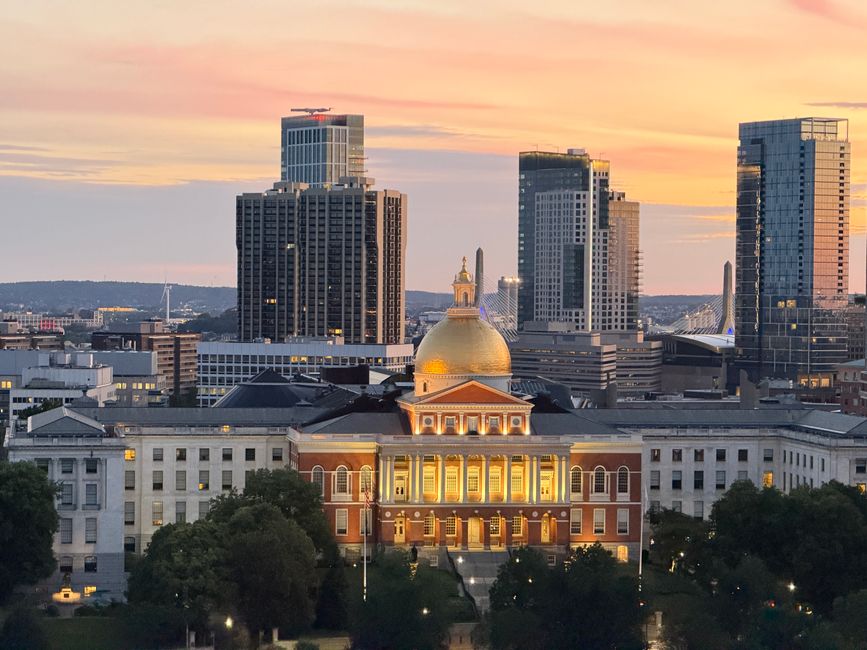
Ask a Bostonian how they get to work, and you'll learn more about their neighborhood than any real estate listing ever could. The T is more than transit infrastructure here—it's a daily microcosm of our city's splintered, passionate character.
Take the Green Line, that beloved mess of a trolley that cuts through some of our most distinctive territory. Board at Copley, and you're among the Back Bay professionals, the museum-goers, the students perpetually stressed about rent. By the time you reach Kenmore, the car has transformed—younger crowds, tattoo sleeves visible, the energy of Fenway bleeding into the carriages. Meanwhile, the Red Line's commuters heading south through Dorchester and Mattapan represent entirely different Boston: working families, small business owners, the neighborhoods that actually built this city's spine.
The ferry system offers perhaps the most revealing window into neighborhood identity. Those who've made the financial commitment to the Long Wharf–Charlestown or Harbor View–Seaport routes have chosen lifestyle along with logistics. They're watching sunrise over the water, chatting with the same faces daily, inhabiting a commute that feels almost leisurely. It costs more—around $90 monthly versus the $85 for a standard T pass—but it's a choice that speaks to how some neighborhoods have gentrified while others resist.
The biking infrastructure tells another story entirely. The Greenway, that serpentine path from the Haymarket to the Seaport, has become a social corridor as much as a commuting artery. Cyclists clip past the Rose Kennedy Greenway's gardens, creating an informal community of early risers united by spandex and determination. Meanwhile, neighborhoods like Jamaica Plain and Cambridge maintain their bohemian edges partly because cycling culture there predates Instagram—it's authentic, utilitarian, and fiercely independent.
Rideshare has complicated everything. Every hulking SUV with an Uber sticker represents neighborhood transformation, pushing out long-term residents, reshaping traffic patterns. Yet it's also revealed how many Bostonians value time over money—a 20-minute Uber from Allston to Downtown runs $18-25, steep for transit users, but someone's paying it.
Perhaps the most honest commute assessment comes from those walking. Neighborhoods like Beacon Hill, the South End, and Cambridge's Harvard Square are defined by their walkability—by a pace that allows neighborly nods, storefront recognition, real community formation. The person who knows their barista's name, who stops at the same brownstone every morning to pet someone's dog, has chosen a very different Boston than the Uber commuter blasting through it.
We don't just live in neighborhoods. We move through them. And how we move reveals who we've become.
This article was compiled by AI from the sources linked above and screened before publishing. See our editorial standards.
How does this story make you feel?
Spread the word
About this article
Published by The Daily Boston
Daily brief
Free, in your inbox before 7am. Weekdays.
More in lifestyle